Innhold i denne artikkelen
When someone says, "we're not visible," the first question I always ask is: visible for what? The answer determines everything, because the causes can be very different, and so can the solutions.
'We're not visible', but for what?
This is always the first question, and the answer almost always falls into one of three scenarios.
You're not visible for your own brand name
That's a red flag, and it needs to be fixed. Fortunately, this is usually the easiest problem to solve.
If Google doesn't show you when someone searches for your company's name, something is fundamentally wrong: either the page isn't indexed, noindex is active, there's a serious technical issue, or someone else owns that term better than you do.
You're not visible for a major, competitive keyword
This isn't necessarily a problem; it's a matter of strategy and domain authority.
If you've just launched an online shop and are wondering why you don't rank for "buy sofa," you're competing against websites that have been around for ten years, with hundreds of pages, thousands of links, and an editorial team. It's not a technical problem, it's a scale problem, and it takes time to solve.
You're not visible for keywords you should actually own
This is where the work is worthwhile: niche keywords, local keywords, industry-specific terms, and questions your target audience is asking that no one has answered properly yet.
This is where a small business can actually beat large players—not on the broad terms, but on the depth and relevance within a niche.
What does visibility mean in 2026?
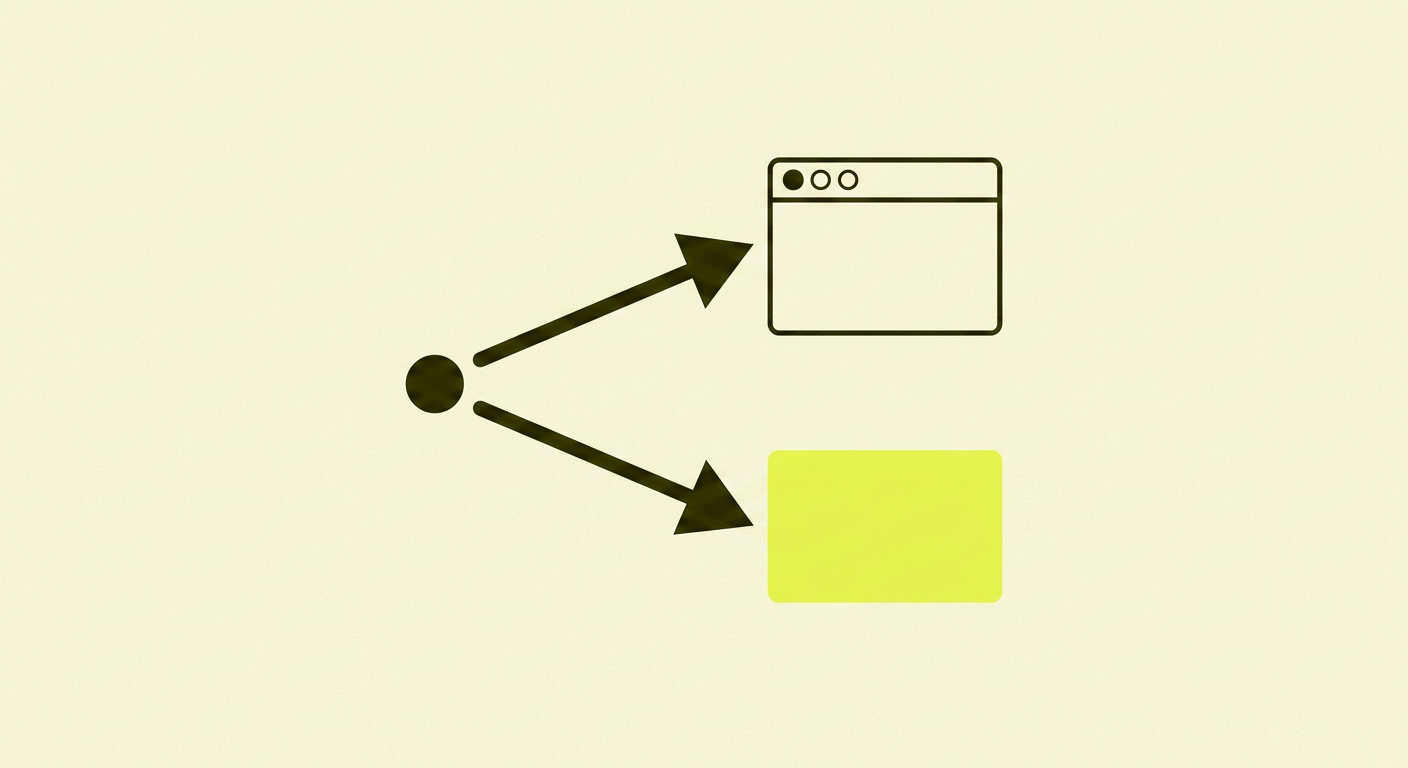
Visibility is no longer just about showing up in Google. There are two channels you should be concerned with, each with a different logic but the same foundation.
- SEO, organic visibility in Google. See What is SEO?
- GEO, visibility in AI-generated answers from ChatGPT, Perplexity, and Gemini. See What is GEO?
Both are relatively stable channels once they are established. They don't give you visibility because you exist, but because you are the best answer to a question someone is asking. That's an important distinction.
You have to earn your visibility
Google says "create helpful content" in a way that sounds mysterious, but it means something very specific in 2026.
- You must answer what people are actually searching for, not what you want to tell them.
- You must do it regularly and in volume; one blog post from 2022 doesn't count.
- You must do it better than those who already rank.
- And it must be genuine, based on experience and expertise, not generic AI text without editorial review.
It's not hocus pocus; it's systematic work over time, and that's why SEO and GEO are worth investing in. The visibility, once you've built it, works for you around the clock.
Technical reasons why you're not showing up
These are errors you might not know about, and they could be the entire explanation. Check these before you do anything else.
noindex is active
Your page is explicitly telling Google not to index it. This happens more often than you think, usually after a launch where the staging setting was never turned off. A single line of code can make your entire website invisible.
The page isn't indexed
Google either doesn't know your page exists or has chosen not to include it in its index. The reason could be a lack of internal links, thin content, or the page being too new. Check Google Search Console under "Pages" to see the status.
robots.txt is blocking crawling
The file that controls which parts of the site Google is allowed to visit might be configured incorrectly. One line in the wrong place can block the entire website. Be careful editing robots.txt without knowing what you're doing.
The page loads too slowly or isn't mobile-friendly
Google uses Core Web Vitals as a ranking factor. A page that is too slow or doesn't work on mobile will rank lower; in the worst-case scenario, it won't be shown at all to users on mobile devices.
Bing indexing is missing
ChatGPT and Microsoft Copilot use Bing as their technological foundation, so if your site isn't indexed there, there's little chance of being cited in AI-generated answers from these tools. Verify your site in Bing Webmaster Tools.
Strategic reasons why you're not showing up
These are harder to hear but more important to understand. You can fix technical errors in an afternoon; strategic errors take months to correct.
No one is searching for what you write about
You've created content about topics you find interesting, but no one is searching for them. It's not the content's fault; it's a disconnect between what you produce and what your market is actually asking. The solution is keyword analysis before you write another word.
You're writing for yourself, not for search intent
You know a lot about your field and write about it in your own way, using your own terms, but potential customers use different words. They don't search for your internal terminology; they search for the problem they have. Content that doesn't match search intent won't rank, no matter how well it's written.
The content is too thin or too generic
A page with 300 words that superficially covers a topic can't compete with a 2,000-word page that actually answers all of a reader's questions. Google sees the difference. So do AI models.
You're competing against sites with far more authority
Domain authority is built over time through links, mentions, and history. A new website can't compete with an established player on major keywords. The strategy is to start with keywords where the competition level is manageable and build authority from there.
You publish too infrequently and randomly
Three blog posts in 2023 and nothing since won't cut it. Google rewards sites that are updated regularly with relevant content, and AI models prefer fresh sources. One good article a month beats ten half-hearted articles a quarter, every time.
What to do now? A prioritised action plan
- Define what you actually want to be visible for: three to five realistic keywords, not 'everything'.
- Check your technical foundation: `noindex`, indexing, and crawl errors in Google Search Console, and Bing Webmaster Tools for ChatGPT visibility.
- Do keyword analysis: find out what your target audience is actually searching for, not what you think they are searching for.
- Create a content plan based on the analysis: which keywords, on which pages, in what order, for the next three to six months.
- Execute consistently over time: publish, update existing content, and measure the impact in Search Console.
In summary: my opinion
Most people who say they "aren't visible" haven't actually answered the question of what they want to be visible for, and that's always where I start.
Next: technical problems first, because they can be the entire explanation and are relatively easy to fix. Strategic problems after that, because they require you to actually change the way you work with content.
Visibility in Google and ChatGPT isn't something you buy or fix once. It's something you build, systematically and over time, by being the best answer to the questions your target audience is asking. The concept is simple; the execution is what requires effort.
Further reading
Want to dig deeper into the topic? These are worth your time:
- What is SEO and how does it work?, the foundation on which all visibility is built
- What is GEO and how do you get visible in AI search?, how ChatGPT, Perplexity, and Gemini choose their sources
- Google Search Console, the free tool for understanding what Google actually sees on your website
- Bing Webmaster Tools, verify that your site is indexed for ChatGPT visibility
- Google Search Central documentation, official recommendations on indexing and content requirements
- Creating helpful, reliable, people-first content, Google's own framework for what "good content" actually means (E-E-A-T)