Innhold i denne artikkelen
It feels safe to implement something when everyone's talking about it. The problem is that for most businesses, llms.txt is a distraction from what actually provides visibility in AI answers.
What is llms.txt?
Simply put, llms.txt is a standardised text file you place in the root folder of your website. Its purpose is to give AI models like ChatGPT, Claude, and similar ones a structured overview of your content.
Think of it as a kind of sitemap, but designed for machines that read and understand natural language. Instead of listing URLs with metadata, llms.txt provides contextual information about what the website is about.
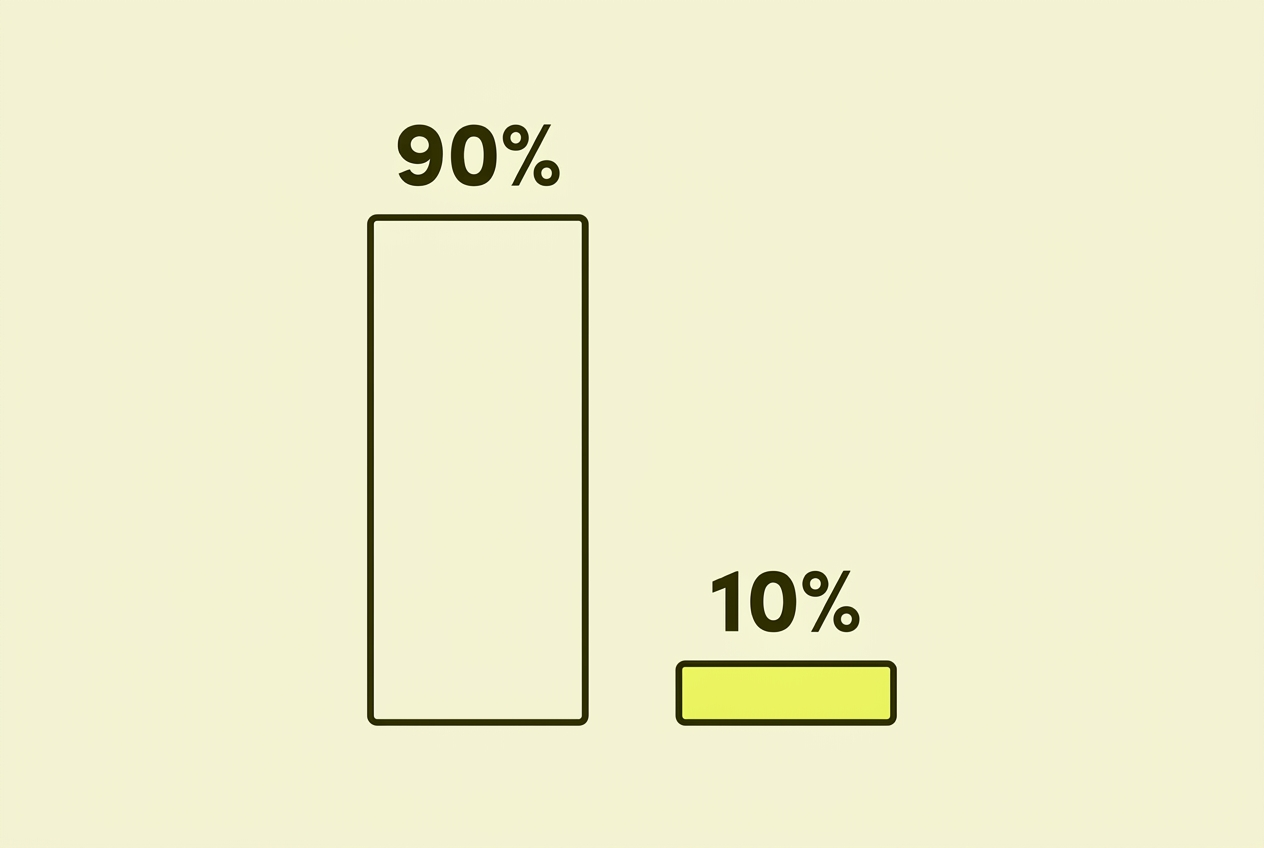
It sounds reasonable in theory. In practice, the format is still young. According to an Ahrefs analysis, only about 10% of websites had implemented an llms.txt file by the end of 2025.
How does llms.txt work in practice?
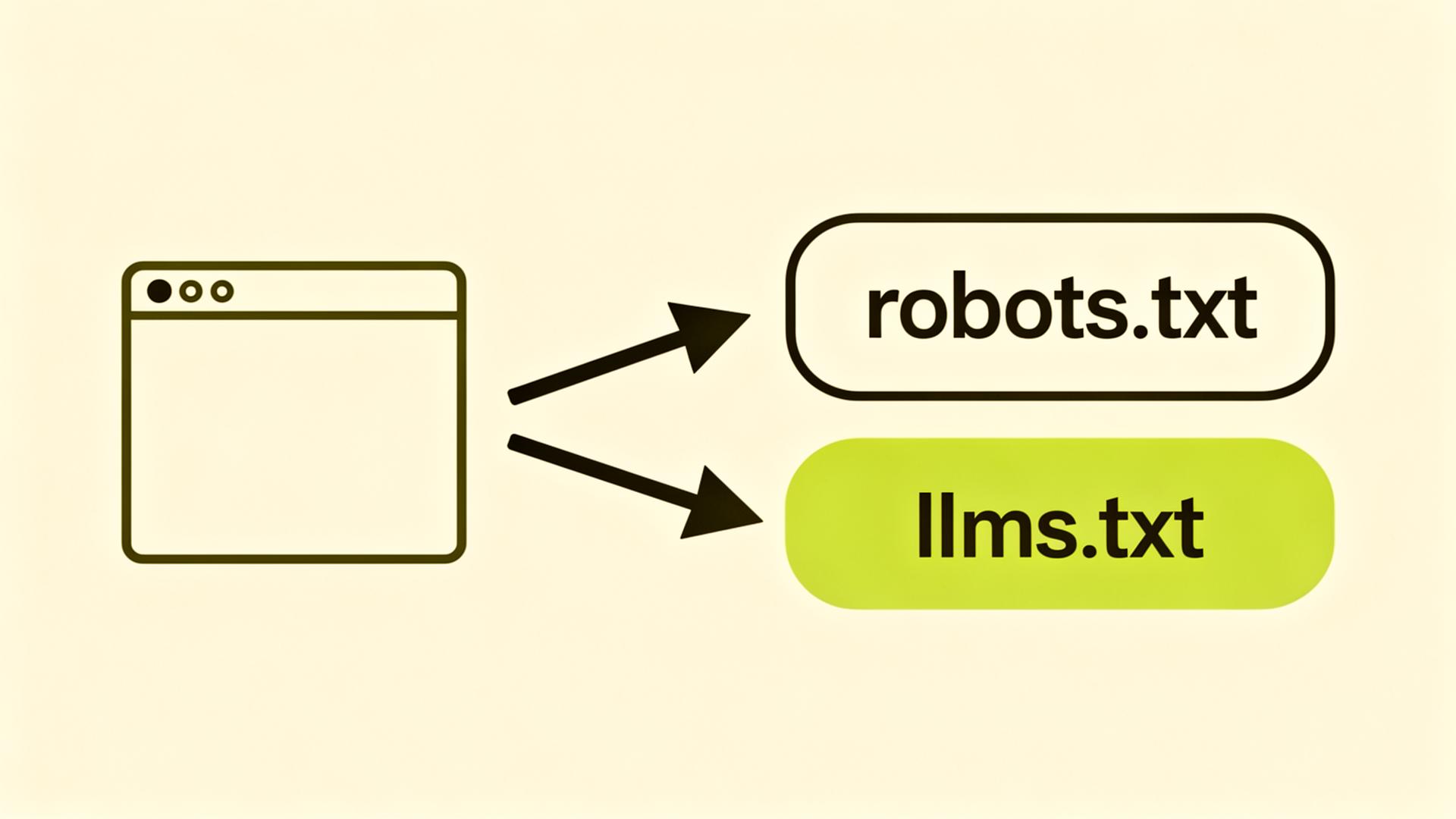
The file follows a simple format. You create a text file called llms.txt and place it in the root folder of your domain, i.e., at the same level as robots.txt.
The content describes the website in natural language. A typical structure might look like this:
- A short description of the business
- Main content categories
- Links to the most important resources
- Context about the target audience
There is also a variant called llms-full.txt which contains more detailed information. Early observations suggest that AI models that actually use the format prefer the more comprehensive version—but very few "actually use" it.
What I often see go wrong with llms.txt
After talking to a number of businesses that have jumped on the bandwagon, I see the same patterns repeating.
- You think it replaces good SEO. The most common mistake is treating llms.txt as a shortcut. AI models are trained on enormous datasets—a small text file on your site doesn't affect the training data at all.
- You spend too much time on the format. I've seen teams spend days perfecting the wording. There is no documentation that this has any effect. That time could have been spent creating better content.
- You ignore what Google says. Google has repeatedly confirmed that they do not use llms.txt, and that for their systems, the file functions like any other random text file.
- You overestimate AI search traffic. For most businesses, over 90% of organic traffic still comes from traditional search engines. Optimising for a small fraction before the fundamentals are in place is a backward priority.
- You forget robots.txt. Your most important tool is still robots.txt—that's where you control which bots get to use your crawl budget at all. It's more important to keep useless bots out than to invite them in with a special file.
What does the data actually say?
This is the core of the whole discussion. Search Engine Journal covered an analysis by SE Ranking that looked at around 300,000 domains and measured the correlation between having an llms.txt file and how often the domain was cited in major AI answers.
The finding: no measurable correlation.
That doesn't mean the format is worthless—it means that, for now, we have no proof that it actually moves the needle. When a study of this magnitude finds no effect, it should make you think carefully about your priorities.
Rankability has conducted similar monthly analyses of the largest websites globally. Their numbers confirm the same picture: low adoption and no clear correlation between implementation and visibility in AI answers.
Llms.txt: How to do it right (if you're going to do it at all)
If, after all this, you still want to give it a try, do it right. Here's what actually makes sense.
1. Start by understanding your audience
Before you implement it, ask yourself one question: who are your users, and how do they find you? If your audience primarily uses AI assistants to solve problems—developers, technical decision-makers, B2B software buyers—then llms.txt could be relevant. For a local hair salon or a niche e-commerce shop, it's not.
2. Keep it simple and relevant
Describe your business clearly and concisely. List the most important resources. Done. Treat the file as infrastructure, not a marketing channel.
3. Prioritise content first
The best thing you can do for visibility in AI answers is to create content that is so good it gets cited regardless. AI models draw from sources that are authoritative, thorough, and relevant. No llms.txt file in the world can compensate for thin content.
Your llms.txt action plan: Step-by-step
If you've considered it and concluded it's worth your time, here's a concrete plan.
| Step | What you do | Time |
|---|---|---|
| 1 | Assess if your target audience actually uses AI assistants—if the answer is no, stop here | 10 min |
| 2 | Map the most important pages and resources on your site | 30 min |
| 3 | Write the file: short description, main services, key resources, contact info | 1 hr |
| 4 | Upload to the root folder—verify it's at yourdomain.co.uk/llms.txt | 15 min |
| 5 | Set up server logging for requests to /llms.txt | 30 min |
| 6 | Go back to working on content and authority—this wasn't the miracle cure | Ongoing |

llms.txt template: ready to copy
A good llms.txt file should be minimalist and free of marketing fluff. For an AI model, structure and facts are more important than adjectives. You can copy the template below, paste it into a text file, and save it as llms.txt.
# [Company Name]

> [Describe the company in one sentence. Who do you help, and with what?]

## Summary

[2–3 sentences about your core business. Use facts:
what services do you offer? What problems do you solve?
Keep it objective.]

## Key Resources

- Service 1 - [Short description]
- Service 2 - [Short description]
- Pricing Information - Overview of packages and prices
- About Us - Information about the team and our experience

## Contact & Support

- Contact Page - https://yourdomain.co.uk/contact
- Documentation/FAQ - https://yourdomain.co.uk/faq
A couple of rules when filling it in:
- Name and description: The AI uses the top line to categorise who you are. Be specific.
- Summary: Drop words like "leading", "innovative", and "best". Instead, write "We provide plumbing services in London" or "SaaS platform for project management".
- Key Resources: Here, you give the AI direct links to the pages that contain the most value. If an AI is going to answer on your behalf, this is where it will get its sources.
- Full URLs: All links must be absolute (including
https://).
In summary: My opinion on llms.txt
The short answer is that llms.txt is an interesting experiment, but not a priority for most businesses.
The data doesn't support the hype. No measurable effect on AI citations in large studies. Google ignores it completely. Adoption is low. For certain niches—especially developer tools and technical documentation—it might make sense as a small part of a larger strategy.
My recommendation: implement it if you have time to spare and your audience is technical. Don't expect it to move the needle on its own. Instead, focus on creating content so good that it gets cited no matter what technical files you have or don't have.
The AI landscape is changing fast. What's irrelevant today could become important in a year. Keep an eye on developments—but don't let FOMO drive your technical decisions.
Where to read more about llms.txt (for the particularly interested)
If you want to dive deeper into the topic, I recommend these resources.
- Ahrefs — What Is llms.txt, and Should You Care About It? — A solid technical breakdown of the format, with adoption figures.
- Search Engine Journal — LLMs.txt Does Not Boost AI Citations — The analysis of 300,000 domains that is at the core of this discussion.
- Search Engine Roundtable — Google Does Not Endorse LLMs.txt Files — Google's official position, summarised by Barry Schwartz.
- Rankability — LLMS.txt Adoption Research Report — Monthly updated adoption statistics for the largest websites.
- llmstxt.org — The original specification for the format, if you want to go straight to the source.
- Google Search Central — Robots and crawling — To understand why robots.txt is still more important than llms.txt.