In this article
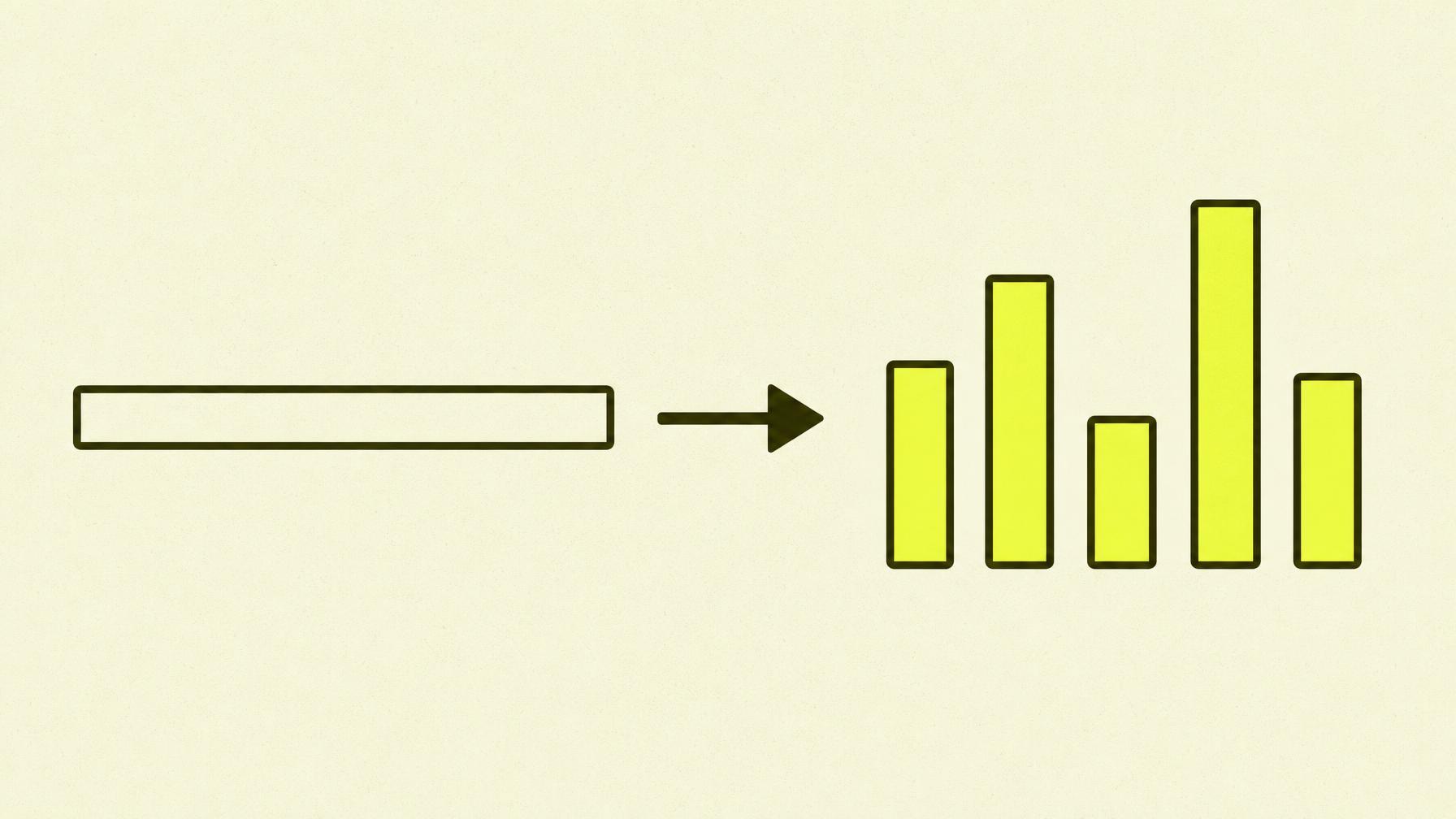
Everyone's talking about AI, but few are using it well. The difference isn't which model you choose, but how good your prompts are.
Why Most AI Prompts Fail
The vast majority of people I work with write prompts like 'write an 800-word SEO article about accounting software'. The result is what you'd expect: a generic list that could have been written about anything.
The reason is simple: you haven't told the AI who you are, who you're talking to, what the point is, or what the result should look like. All of these are filled in with the average of everything the model has seen on the internet. The average of the entire internet is, by definition, mediocre.
The Anatomy of a Good SEO Prompt
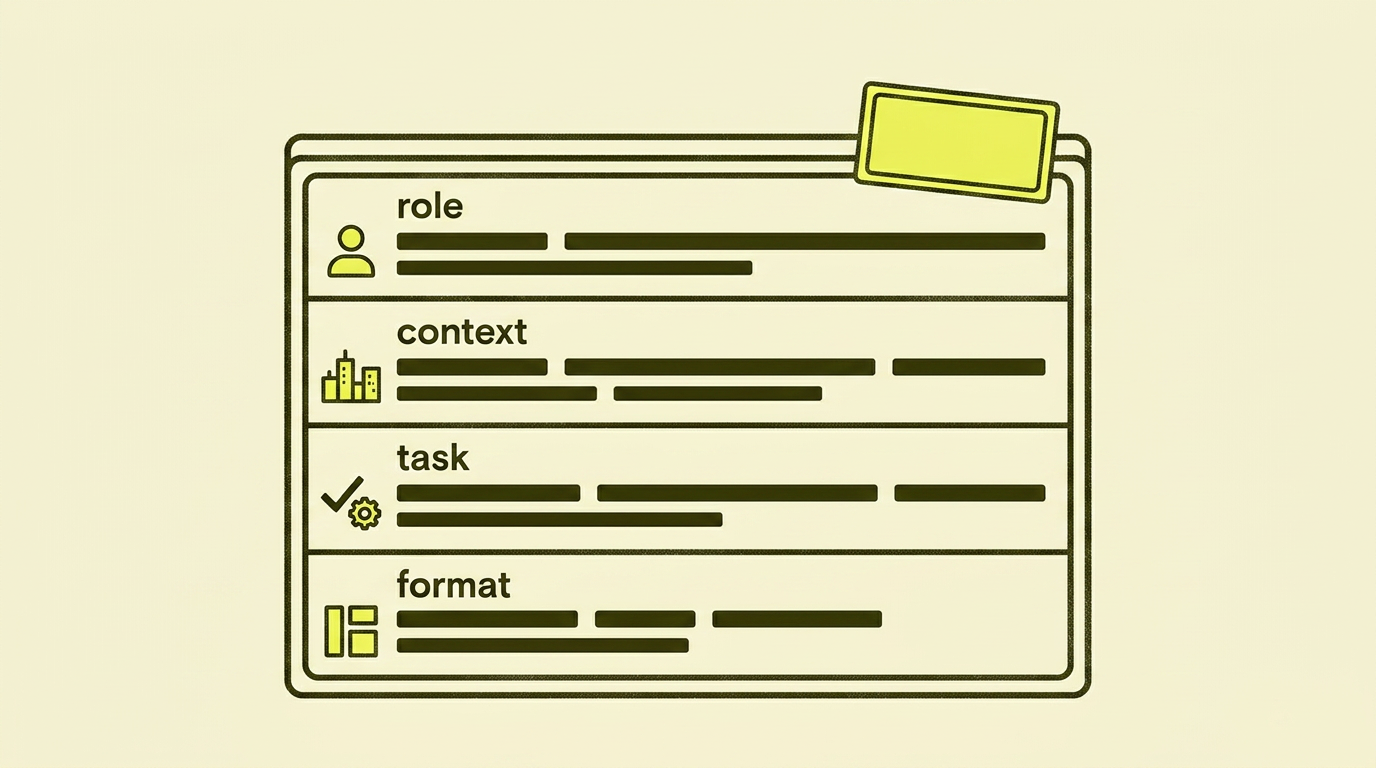
After two years of daily use, I've settled on four parts that should always be included:
- Role — who the AI is right now. 'You are an experienced SEO consultant with specialist knowledge of Nordic e-commerce'.
- Context — the company, target audience, and standpoint. 'The company sells winter tyres to consumers. The competitors are low-price players'.
- Task — what it should actually do. 'Write a 200-word H2 section about when you should change to winter tyres'.
- Format — what the answer should look like. 'Use British English, a second-person ("you") tone, one H2, and a bulleted list with a maximum of 5 points'.

If you swap out one of the four parts, you can change the entire prompt without building it from scratch every time. It's faster, more consistent, and easier to share with your team.
Four Prompts I Actually Use
Below are stripped-down versions of prompts I use in my daily SEO work. Copy them, adapt them to your company and target audience, and test them.
1. Prompt: Keyword Research
You are an experienced SEO consultant in the UK.
The company I work with sells [PRODUCT/SERVICE] to [TARGET AUDIENCE].
Price level: [LOW/MEDIUM/HIGH]. Market: [CITY/UK/EUROPE].

Task: Suggest 15 keywords I should consider. For each one:
- The keyword
- Estimated intent (informational/commercial/transactional)
- Likely ranking difficulty (low/medium/high)
- One sentence explaining why it's relevant

Format: Table. Sort by intent.
Use this as a starting list. Check the actual volumes in Google Search Console or Semrush afterwards; AI gets volumes wrong.
2. Prompt: Content Brief
You are an experienced SEO consultant.
I am going to write an article about [KEYWORD].
The target audience is [DESCRIPTION], and they are looking for [PROBLEM].
The tone should be [DESCRIPTION, E.G., 'direct, second person, concrete'].

Task: Create a brief with:
- Suggested H1 (SEO-optimised, max 60 characters)
- Meta description (max 155 characters)
- Structure with H2s and H3s
- 3 points on what must be covered for E-E-A-T
- 3 questions to answer in an FAQ section

Format: Markdown list.
This saves me 30 minutes per article. I always edit the structure, but the basic framework is usable 8 out of 10 times.
3. Prompt: Meta Title and Description
You are an experienced SEO copywriter.
The article is about [TOPIC] and its main message is [SENTENCE].
The target audience is [DESCRIPTION].

Task: Write 5 suggestions for:
- Title (max 60 characters, include the keyword [X])
- Meta description (max 155 characters, with a clear call to action)

Format: Numbered list. For each: a brief justification (1 sentence) for why you chose that angle.
Use this whenever you're stuck. Five suggestions with justifications are quicker to choose from than staring at a blank page.
4. Prompt: Revisions and Refreshing
Below is an article I published 18 months ago. I want to update it.

[PASTE THE ARTICLE HERE]

Task: Suggest:
- 3 sentences/paragraphs that are outdated and should be rewritten
- 2 new sections that would improve the article in 2026
- 3 new internal links (I'll give you the URL structure: /tips/[category]/[slug])
- One new FAQ that addresses 'people also ask' questions I'm likely missing

Format: Bullet points with quotes from the text where relevant.
Content refreshing is one of the most profitable SEO tasks. AI makes it much faster to identify what needs to be done.
Iteration: The Most Important Skill
No prompt is finished on the first try. What I do after the first response is always the same:
- Is something generic? 'Rewrite the section about X, make it more concrete with an example from the [INDUSTRY]'.
- Is the tone wrong? 'Change to a direct, second-person ("you") tone, without any fluffy language'.
- Is something missing? 'Add a section about [TOPIC]'.
- Is something factually incorrect? Correct it and ask the model to remember the correction for the rest of the conversation.
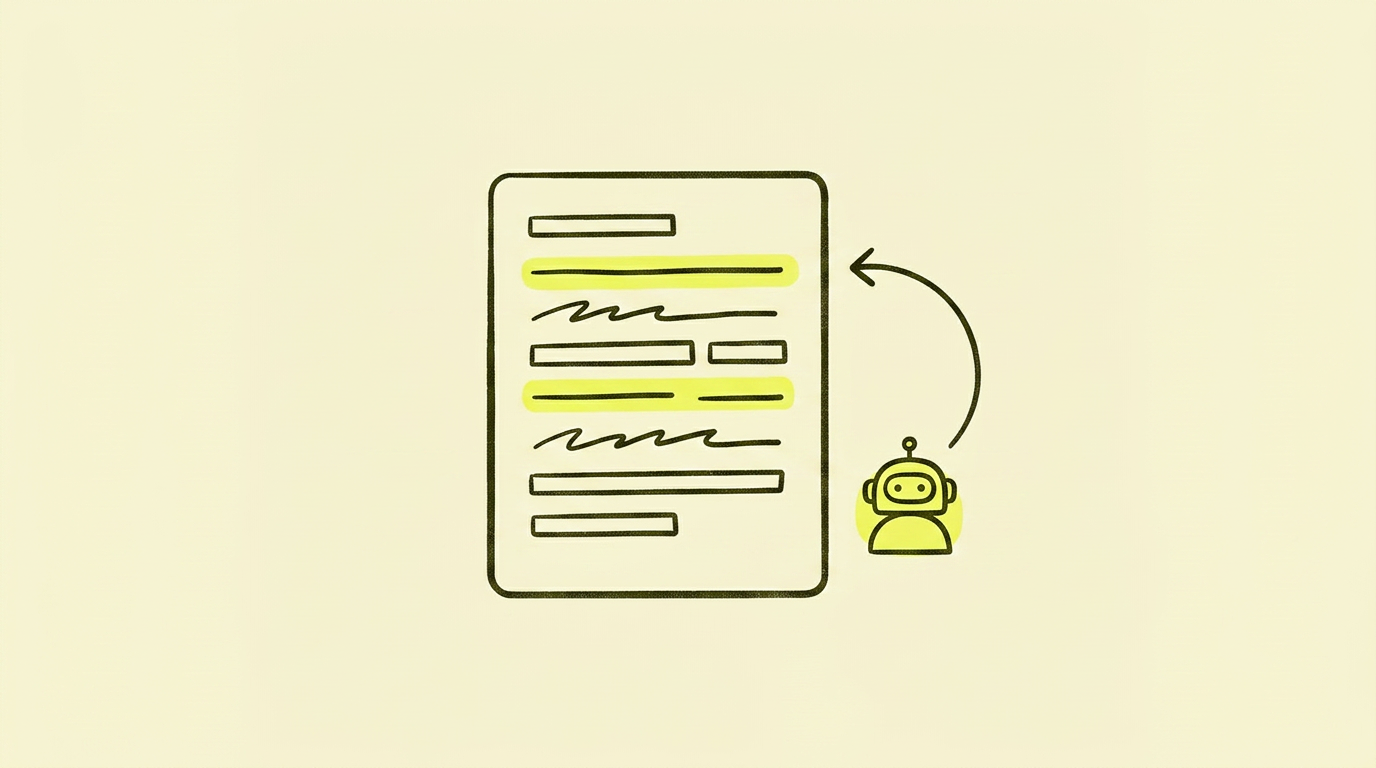
The point is to treat AI as a conversation, not a query. You'll end up using between 5 and 20 'messages' before a first draft is usable. That's normal, and it's faster than writing from scratch yourself.
AI and GEO: Getting Cited by the AI Itself
A bonus of getting good at prompts is that you also understand better how the AI 'reads' your content. This is the very foundation of GEO (Generative Engine Optimisation).
The test prompt I use on my own articles before publishing:
Below is an article I plan to publish.

[PASTE THE ARTICLE HERE]

Task: Summarise the article as if you were ChatGPT answering a user who asks '[QUESTION]'. Feel free to quote from the text.

Format:
- 3-sentence summary
- 2 direct quotes
- Source reference (the URL will be [URL])
If the summary is precise and the quotes are usable, you're in a strong position for AI search. If the summary is weak or misleading, you need to write more clearly, not write more.
I write more about this in the article on GEO and in the article on llms.txt, which are practical companions to this piece.
What I Often See Go Wrong
- Prompts are too short. One sentence is almost never enough. Use 4 lines.
- No role defined. 'You are an SEO consultant' changes the response dramatically compared to the default.
- No target audience. AI writes for 'everyone', which means no one. Always define who the text should reach.
- Publishing directly. No matter how good the prompt is, a human has to elevate the text with an angle, figures, and examples.
- Not giving feedback. The first response is the starting point, not the result. Iterate.
- Copying others' prompts blindly. A prompt tailored for an American B2B SaaS company rarely suits a British tradesperson.
Case Study: From 3 to 12 Articles a Month
A client, a small financial consultancy, wanted to increase their publishing rate from 3 to 12 articles a month. They didn't have the budget to hire a copywriter and were sceptical of AI after a couple of failed attempts.
The problem: Their first attempts with AI produced correct but generic texts that lacked both their tone and their expertise. They abandoned it after two months.
The action: I set up five fixed prompts tailored to their services and target audience, with explicit role, context, and format instructions. I showed them how to iterate and added a quality check step where they inserted their own content: case studies, figures, and quotes from consultants.
The result: They managed 12 articles per month with the same staffing as before. Organic traffic from the articles increased by 180% over 8 months. No articles were 100% AI-generated, but AI did 60% of the heavy lifting.
The point isn't that AI wrote the articles. The point is that they used AI as leverage for their own expertise, not as a replacement.
Your Action Plan: Step-by-Step
| Step | What to do |
|---|---|
| 1 | Choose one task (e.g., meta descriptions) and build one prompt for it |
| 2 | Test the prompt on 5 real pages from your own website |
| 3 | Iterate on the prompt until the responses are usable 4 out of 5 times |
| 4 | Save the prompt somewhere you can find it again, with a name |
| 5 | Repeat with the next task (briefs, revisions, keywords) |
| 6 | After 1 month: you'll have 4–5 prompts that save you time daily |
| 7 | Share the prompt library with your team and let them develop it further |
In Summary: My Opinion on AI and SEO
AI isn't going to replace good SEO professionals. It's going to wipe out those who spent their time on tasks that AI does better. Meta descriptions, briefs, keyword suggestions, revisions—these are things AI can solve in an instant.
What AI doesn't do, and won't be doing any time soon, is providing the angle, the case study, or the phrasing that makes your particular article stand out from the 40 others on the same topic. You still have to do that yourself.
Use AI as leverage. Write prompts like a human brief. Iterate. Don't publish anything that hasn't passed through a human brain first.