The background: "We used to be number one"
The client didn't call because they had a technical problem. They called because they remembered how it used to be.
Five years ago this law firm dominated Google on the keywords that mattered. Since then the visibility had gradually disappeared, without anyone quite knowing why. They had had SEO help along the way, they had produced content, they had migrated platforms. But the site kept performing worse.
They wanted the results back.
"We used to be number one. Then we stopped being it." — The client, at the outset
The diagnosis: three problems in one
It's rarely a single cause when a site stops performing. Here there were three simultaneous problems, and all of them had to be solved in parallel.
1. A migration without a redirect plan
The first thing I did was a technical audit. It quickly revealed that at some point the firm had migrated the site without a redirect plan. Old URLs that Google had indexed and ranked for years now returned 404. All the link authority they had built up was gone.
I built the redirect plan retroactively and rescued what could still be rescued. Doing it after the fact is never optimal — but it's a lot better than leaving it.
2. Around 2,000 pages with heavy duplicate content
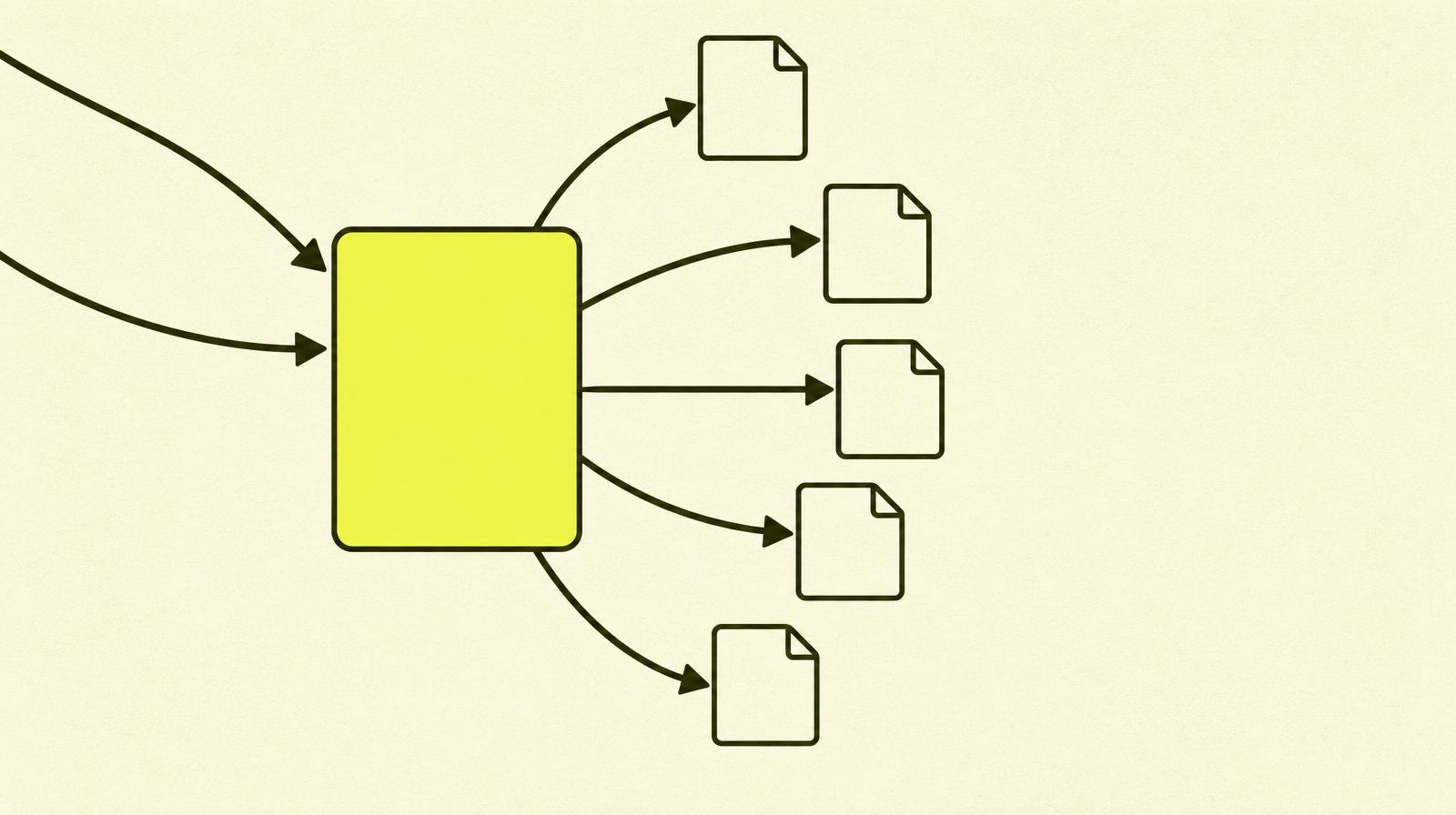
The site had grown organically over many years with no overarching structure. The result: around 2,000 pages, where on many keywords 5–8 different articles were competing with each other. Google didn't know which page to rank, and often picked none of them.
I ran a comprehensive consolidation analysis and produced a prioritised plan for merging, redirecting and rebuilding the content into clear pillar structures with clean URL hierarchies.
3. Content that didn't meet Google's E-E-A-T bar
For legal content, E-E-A-T — Experience, Expertise, Authoritativeness, Trustworthiness — is not a nice-to-have. It's a requirement. Legal advice affects people's lives and finances directly, and Google evaluates these topics under what it calls YMYL (Your Money or Your Life).
The existing content lacked clear expert attribution. Articles were not tied to named lawyers with documented expertise in the relevant field. That's one of the areas I'm working to strengthen.
The strategy: section by section, from the ground up
With 2,000 pages and years of accumulated issues, one thing was clear from the start: this couldn't be fixed overnight. We built a long-term plan.
The heart of the strategy was to rebuild the domain section by section, with one chosen practice-area section as the first pilot. Instead of tweaking the existing content, I rebuilt the architecture from the ground up:
- Consolidation: duplicates merged into one authoritative pillar page per topic.
- Hierarchy: a new URL structure with a logical category and sub-page level.
- Content production: 40 quality-assured articles delivered per month, filling gaps without cannibalising what already worked.
- Keyword research: 600 new article topics identified that didn't compete with existing content, but expanded the domain's topical authority.
- E-E-A-T work: strengthening lawyer attribution on the pillar pages.
What happened — and when
Summer 2025. The pilot section is rebuilt from the ground up. 71 new pillar pages launch with the new hierarchy. Google begins indexing at position 24–25 on average.
Nov 2025 – Feb 2026. The pillar pages climb from around position 20 to around 10. Monthly clicks grow from 376 to 1,120. The rest of the domain is stable.
27 March 2026. Google's March Core Update. A broad global reshuffle with a particularly hard impact on legal sites. Sections with scattered, non-hierarchical content lose visibility. The pilot section weakens slightly but stays far above its starting point.
21 May 2026. Google's May Core Update — just six weeks after March. Pushes down further on the sections that haven't been restructured yet. The pilot section: no further drop.
June 2026. The domain stabilises. The pilot section holds around 1,000 clicks per month — from zero in June 2025. Form submissions up +164 % year over year.
The result: the new content held. The old fell.
Two Google Core Updates in six weeks is a natural experiment. The same update hit two types of content on the same domain. And it treated them completely differently.
The pilot section: from zero to 9,000 clicks
The new architecture didn't exist before summer 2025. Since launch the section has grown every single month up to the March peak — right through a period where the rest of the domain was falling.
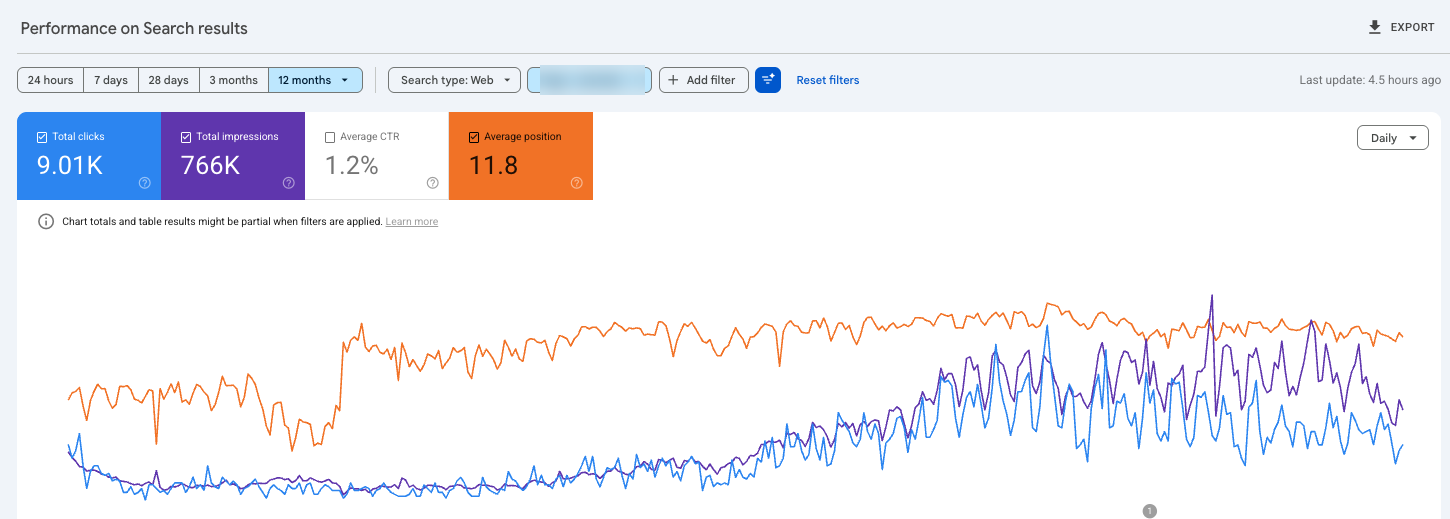
- 9,011 clicks since launch (Jul 2025 – Jun 2026).
- 766,000 impressions — from zero.
- 8.8 best average position (March 2026).
Several of the new pillar pages already rank on page 1, including positions 3–5 for competitive queries in the field. These are pages with no historic footing that have built authority from scratch.
The old content: hit by the updates
The sections not yet restructured were hit hard by the March and May updates. Scattered single articles without clear hierarchy are exactly the content structure Google deprioritised.
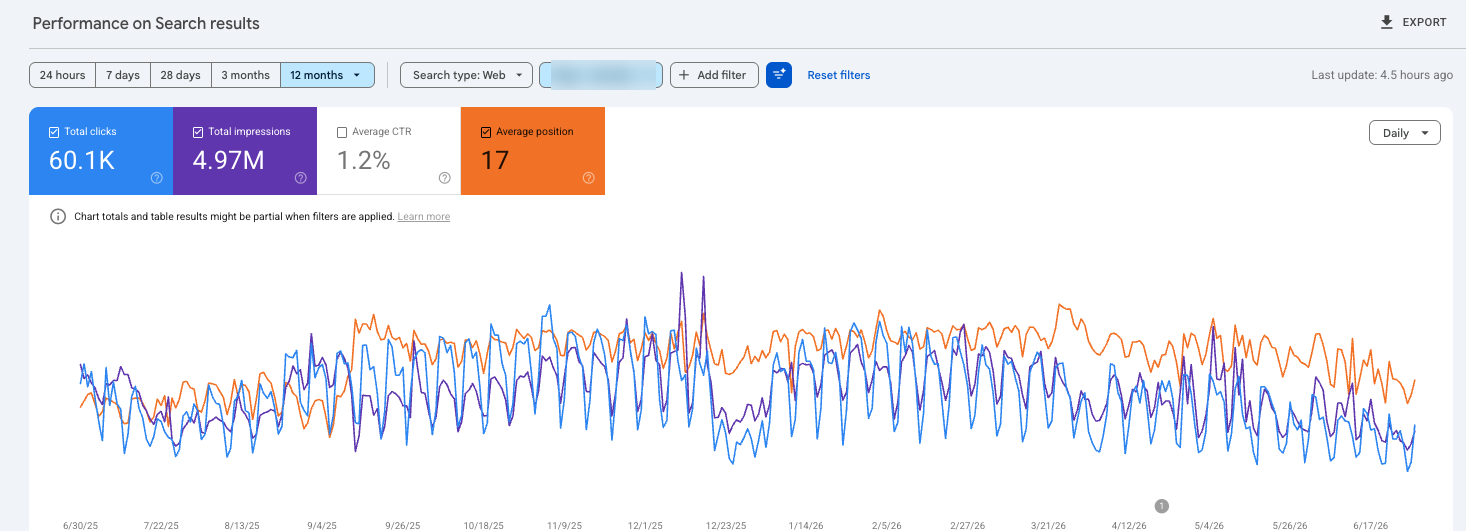
The domain's organic clicks are down 41 % over the last three months compared with last year. But the losses are concentrated in these sections. The pilot section grew through the same period.
What actually matters for a law firm: enquiries
Organic traffic is one measure. For a law firm the real goal is whether people get in touch. Here are the half-year numbers.
- +164 % form submissions in total (H1 2026 vs. H1 2025).
- +326 % on the general contact form.
- +104 % on family-law enquiries.
Organic traffic has fallen because of the Google updates. But the people who do land on the site get in touch at a far higher rate than a year ago. That means the content is reaching people with a real need, not casual browsing.
My advice to you
Do you have a site that once worked better than it does today? It's the most common situation I see. A site with years of content, low technical health and no overarching strategy — a domain Google has gradually stopped trusting.
It's not irreversible. But it needs a plan, and it needs patience. Start with the foundation. Build the structure before you produce more content.