Background: a client with good reason to be worried
The client is a Norwegian online store with more than a thousand products. They had been through a platform change before — the last time without anyone thinking about SEO along the way.
The result was what they themselves describe as "a proper crash". Traffic collapsed, sales followed, and it took a long time to recover. So when it was time to change platforms again — this time to Dynamicweb — the fear was real and well-founded.
"We knew the last one had gone wrong. We were terrified of another crash." — The client, before launch
What I did
A successful platform change isn't one single move. It's a sequence of the right decisions taken in the right order. Here's what we focused on.
Redirect plan before launch
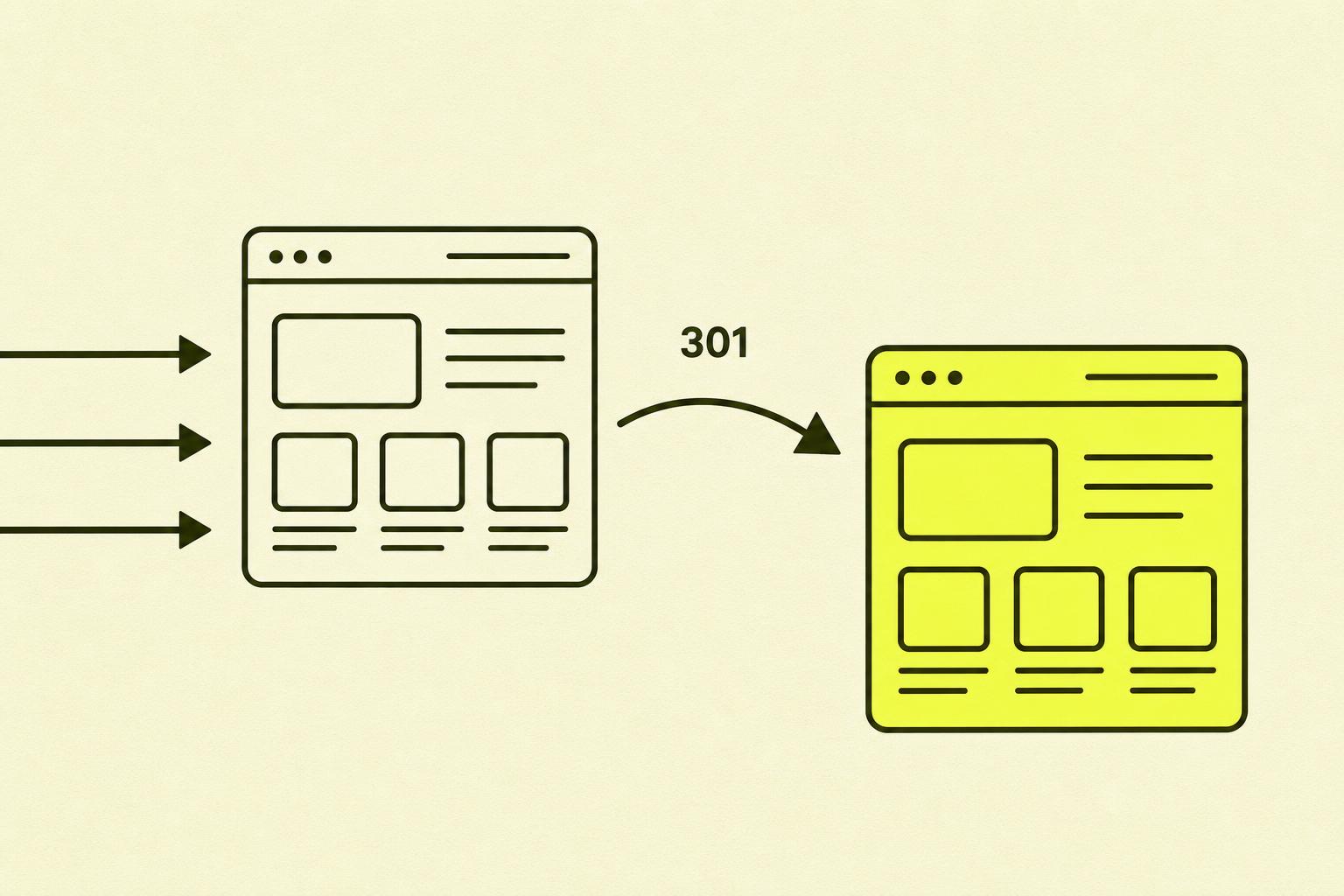
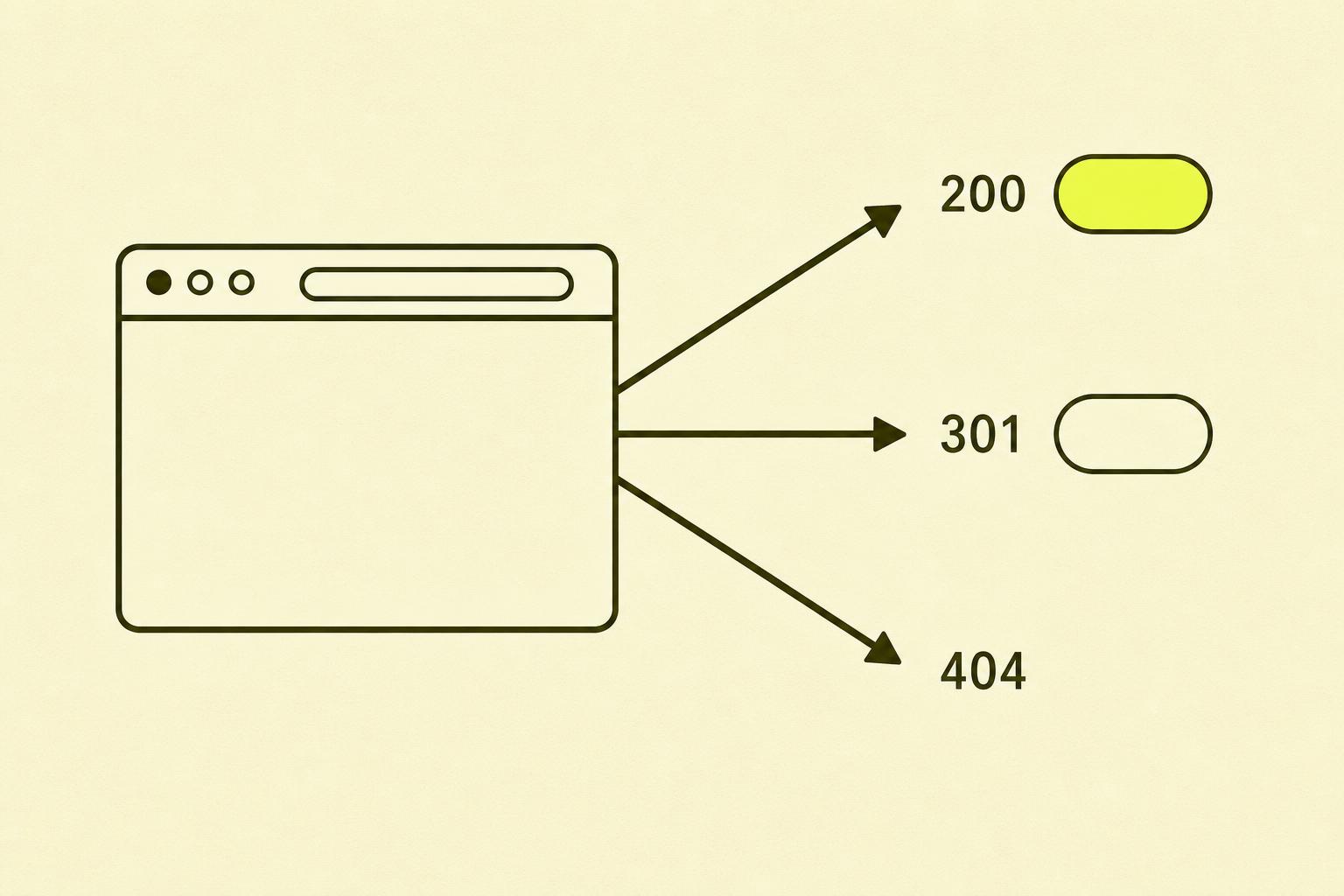
The new platform meant a new URL structure. Every old URL with traffic and inbound links was mapped to its new destination. No important page was allowed to disappear without a 301 in place.
This alone is the main reason the previous attempt failed. Without a redirect plan you lose every bit of accumulated link authority overnight, and Google has to start over evaluating the site.
Canonical issues discovered and fixed
After launch a full Screaming Frog crawl surfaced a templating bug in Dynamicweb: canonical tags were being generated from imported legacy slugs instead of the pages' actual live URLs. 519 of 1,300 URLs were affected.
I categorised the problem into three fix types, produced a complete task list for the developer, and followed up until every canonical issue was resolved. This is exactly the kind of unexpected technical surprise a new CMS can throw at you — and the kind that only shows up if someone is actually looking.
SEO foundations in place from day one
robots.txt, sitemap.xml, canonical tags, and internal linking were verified both before and after launch. GA4 was set up in parallel so we had comparable data from the first day.
Continuous monitoring after launch
The first weeks after a platform change are the most critical. I followed Search Console closely for crawl errors, indexing issues, and any ranking swings.
A few technical surprises turned up — they always do — but they were caught and fixed quickly, before they had time to affect traffic.
The bot has already been through
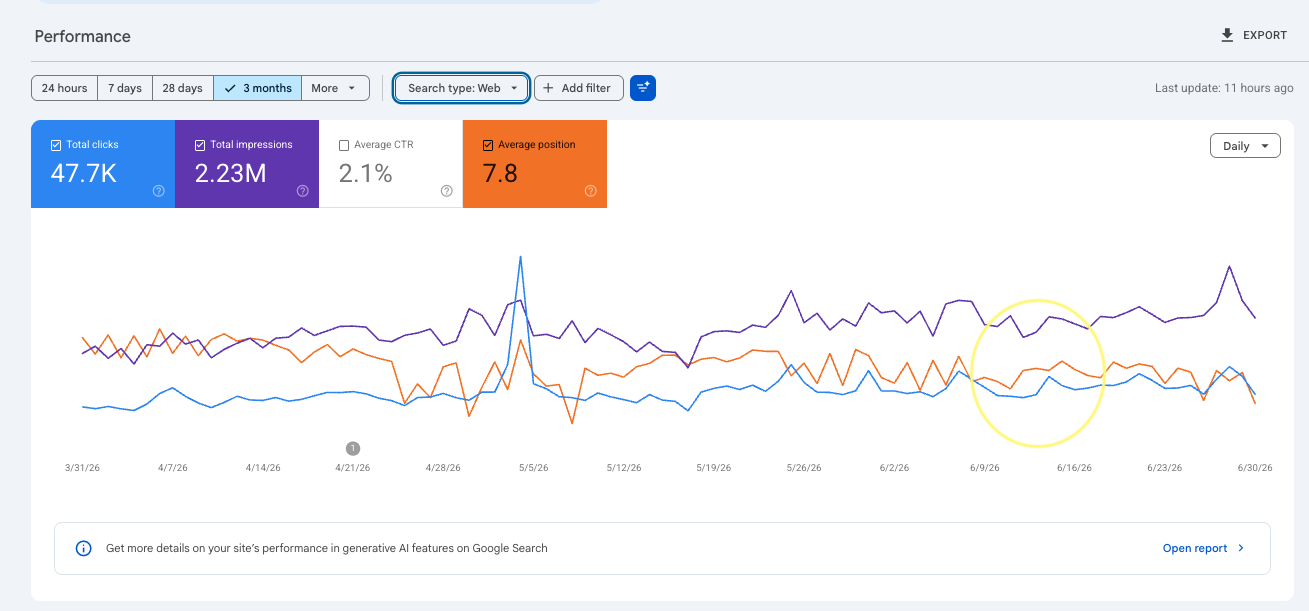
The Coverage and Indexing reports in GSC haven't fully caught up yet — that's normal in the first weeks after a platform change. But the Core Web Vitals report tells its own clear story: both mobile and desktop report well over 1,100 good URLs, and zero poor ones. Google has been through and evaluated the new site.
In the same round, more structured data landed than before — a technical bonus the client gets thrown in, making the site easier to interpret for both Google and AI-driven search surfaces.
The result: stable from day one
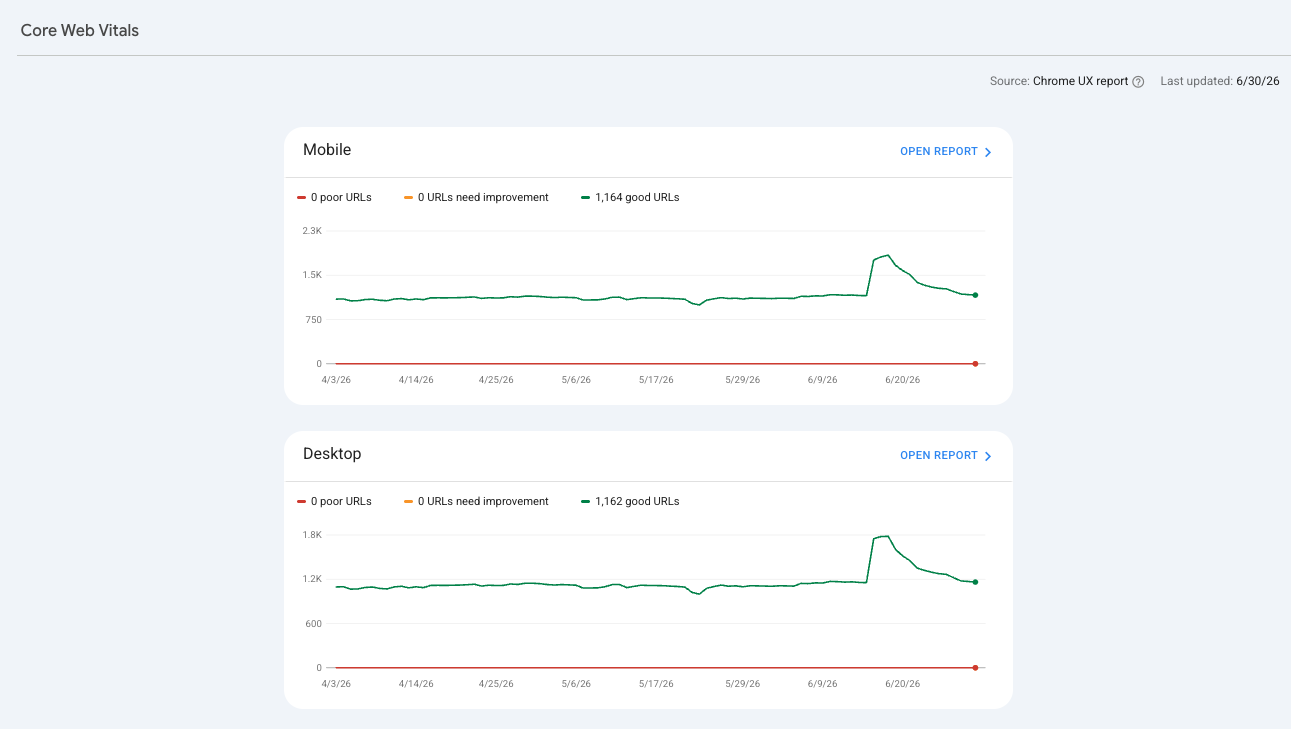
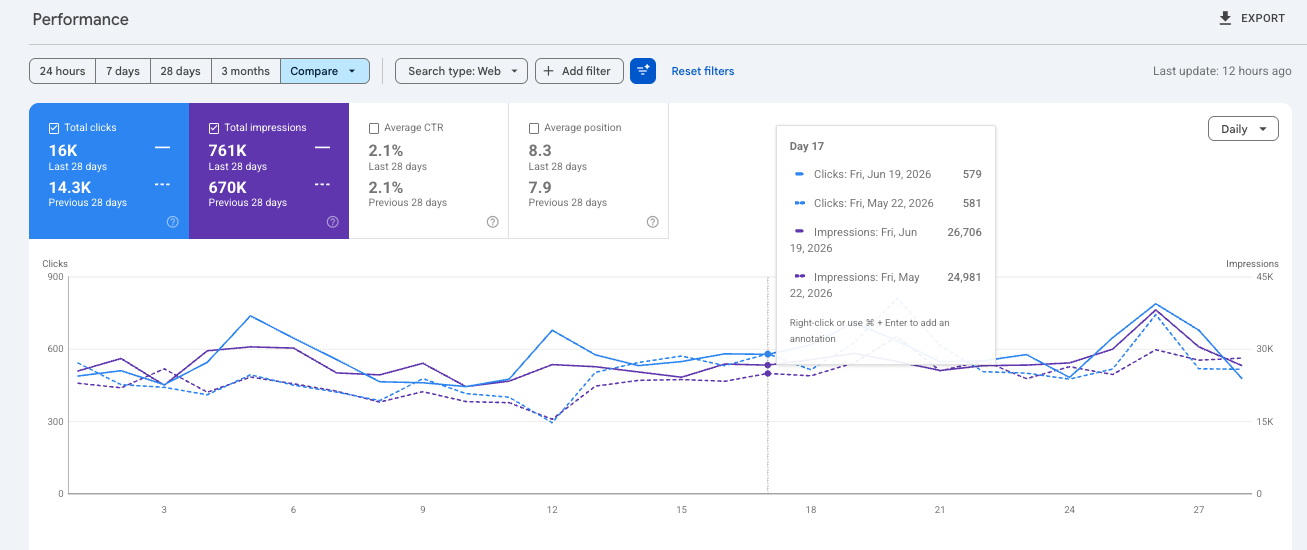
Launch happened on 16 June 2026. The Search Console graph tells the story more clearly than any words: the curves stayed stable through and after the transition — no visible drops on launch day.
Last 28 days vs. prior period:
- Clicks: 16,000 vs. 14,200 — up 13%.
- Impressions: 760,000 vs. 670,000 — also up 13%.
- Average position: 8.3 vs. 7.9 — a marginal shift, well within normal variation after a platform change.
- Orders came in from day one. No negative effect on sales.
"Orders came in from day one, and we didn't notice a negative difference." — The client, after launch
My advice
Planning a platform change? Involve an SEO specialist early — not as a last check before launch. The most important choices are made in the planning phase. And especially: don't let a fixed launch date come before the quality of the execution.