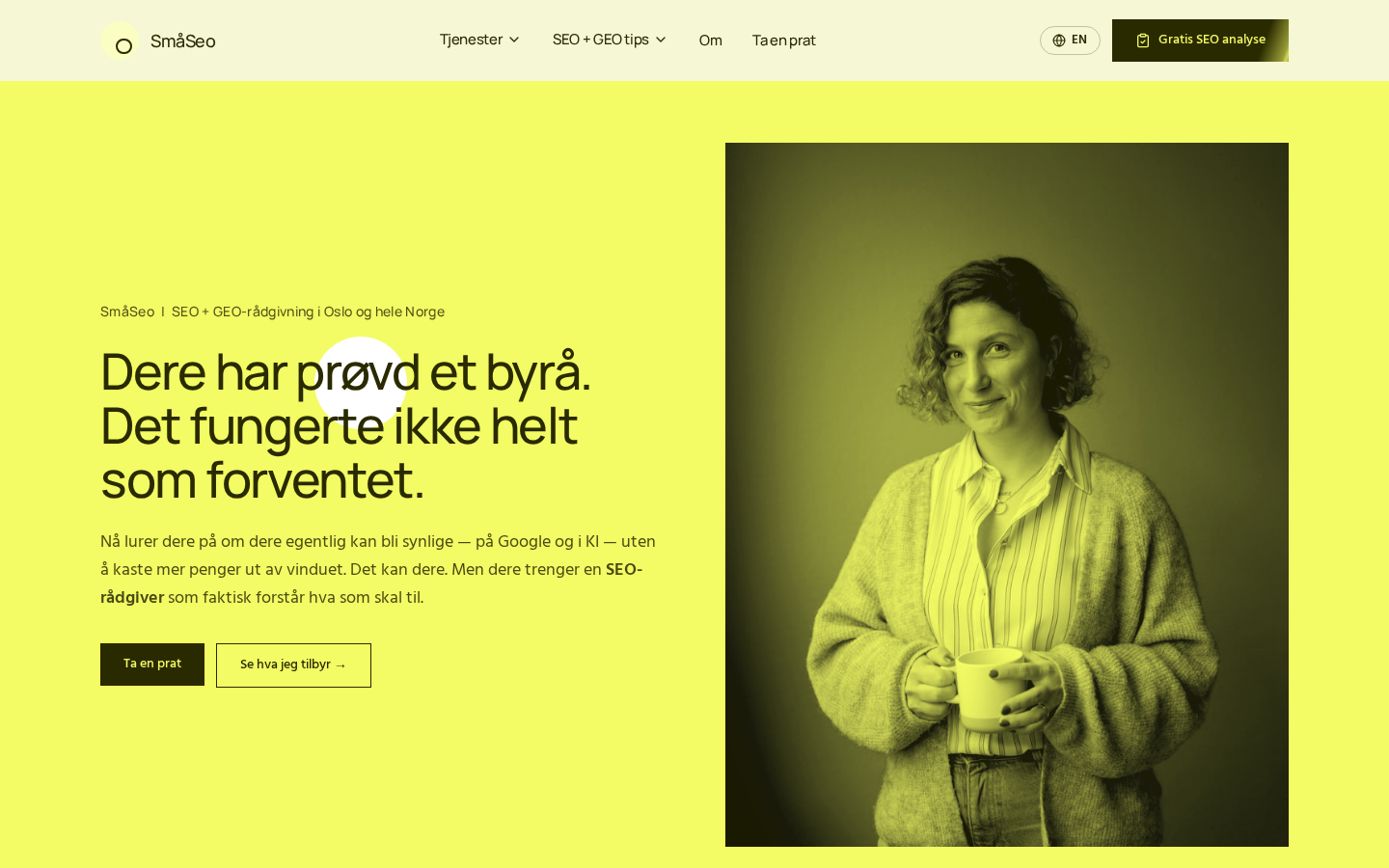
Why my own site is a case study
I sell visibility. So it is not enough to describe how it should be done.
This website is built with the same recipe I use for clients: real ownership, content that answers real questions, and technical work in place before anyone searches. You can look at every choice here and ask me for the same on your own site.
The starting point
I already had a complex website, including a blog. The problem was not that something was missing, but that it was hard to live with.
Publishing articles and keeping them updated was difficult, especially with good SEO in mind. The design aged fast, and bringing everything up to date would have been a big job. On top of that, everything was generally clunky: the editor took a long time to load, and every change felt slow.
I needed three things: something to be found for, something to give away for free, and a way to stay in touch.
The road here was not a straight line
I was leaving Wix anyway, and I was honestly skeptical of AI builders. I had even written about how skeptical you should be.
So I did it the "proper" way: I opened Squarespace and built the new front page and an about page. That took two days.
Then I took screenshots of both pages and fed them into Lovable. Twenty minutes later I had the same pages, in code I owned myself.
That settled it. But it was not the speed alone that convinced me. The new tool did not just make it easier to publish articles and keep them up to date. I also realized I could build my own newsletter tool, one that designs the newsletters in the same style as the website and the blog. Interactive analyses and a content universe that is easy to manage came along the way.
The next five moves are exactly that, one by one.
Move 1: two languages, not one plus Google Translate
My clients are Norwegian. But I also work with people in Switzerland and Germany.
So every page and every article exists as a separate Norwegian and a separate English version, with its own URL, its own title and its own keywords. Not machine-translated on the fly, but actual English text that can rank for English searches.
It pays off somewhere practical too: when I send a newsletter, Norwegian readers get Norwegian links and English readers get English links. Automatically.
Move 2: a content universe, not a blog
More than 30 articles are published, and the queue runs into December. New ones go out on fixed days, one at a time.
The point is not the count. The point is that the articles connect: the big topics have their own pillar articles, with the narrower questions around them, linked to each other. That structure is what makes Google and AI models understand what I actually know.
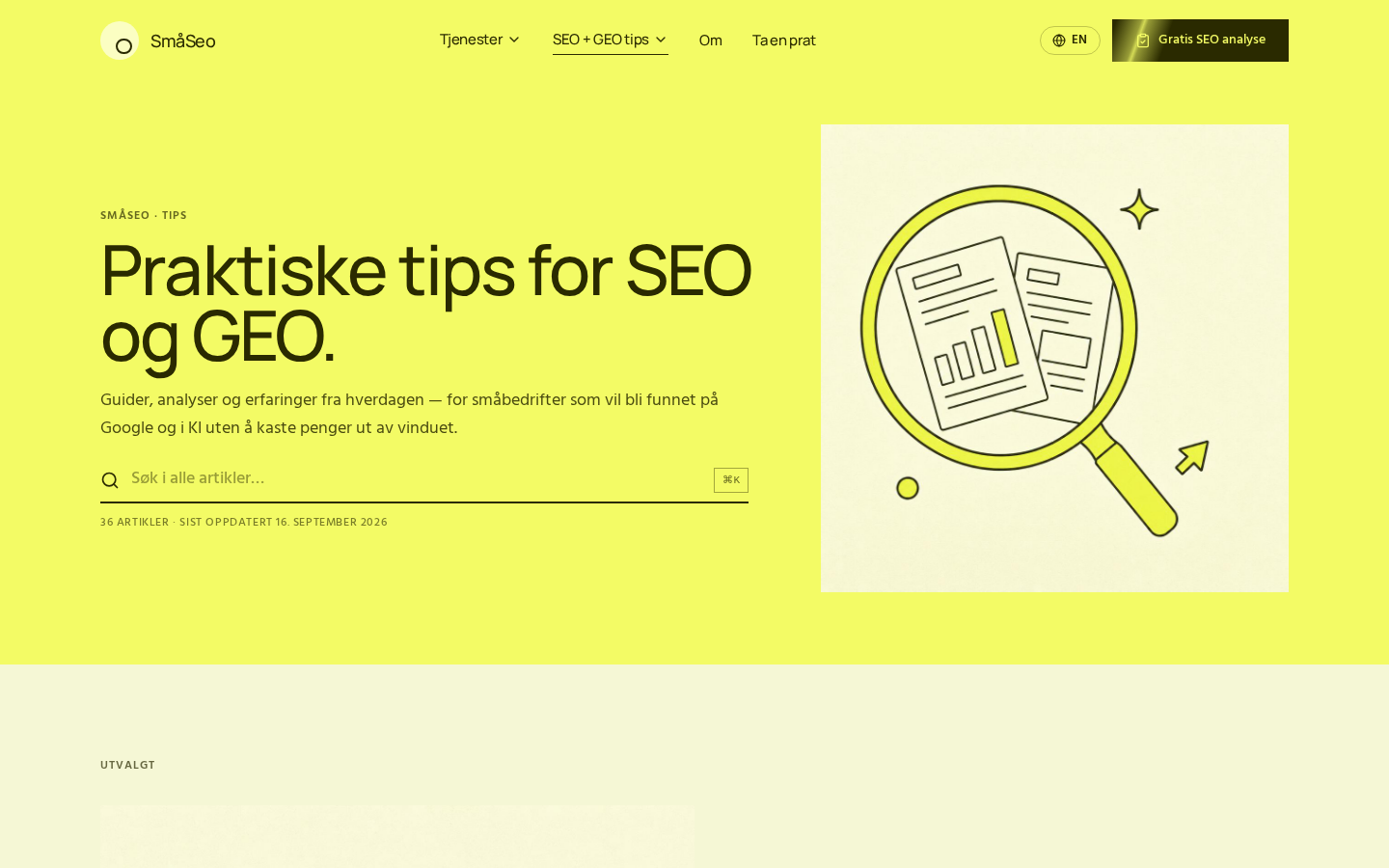
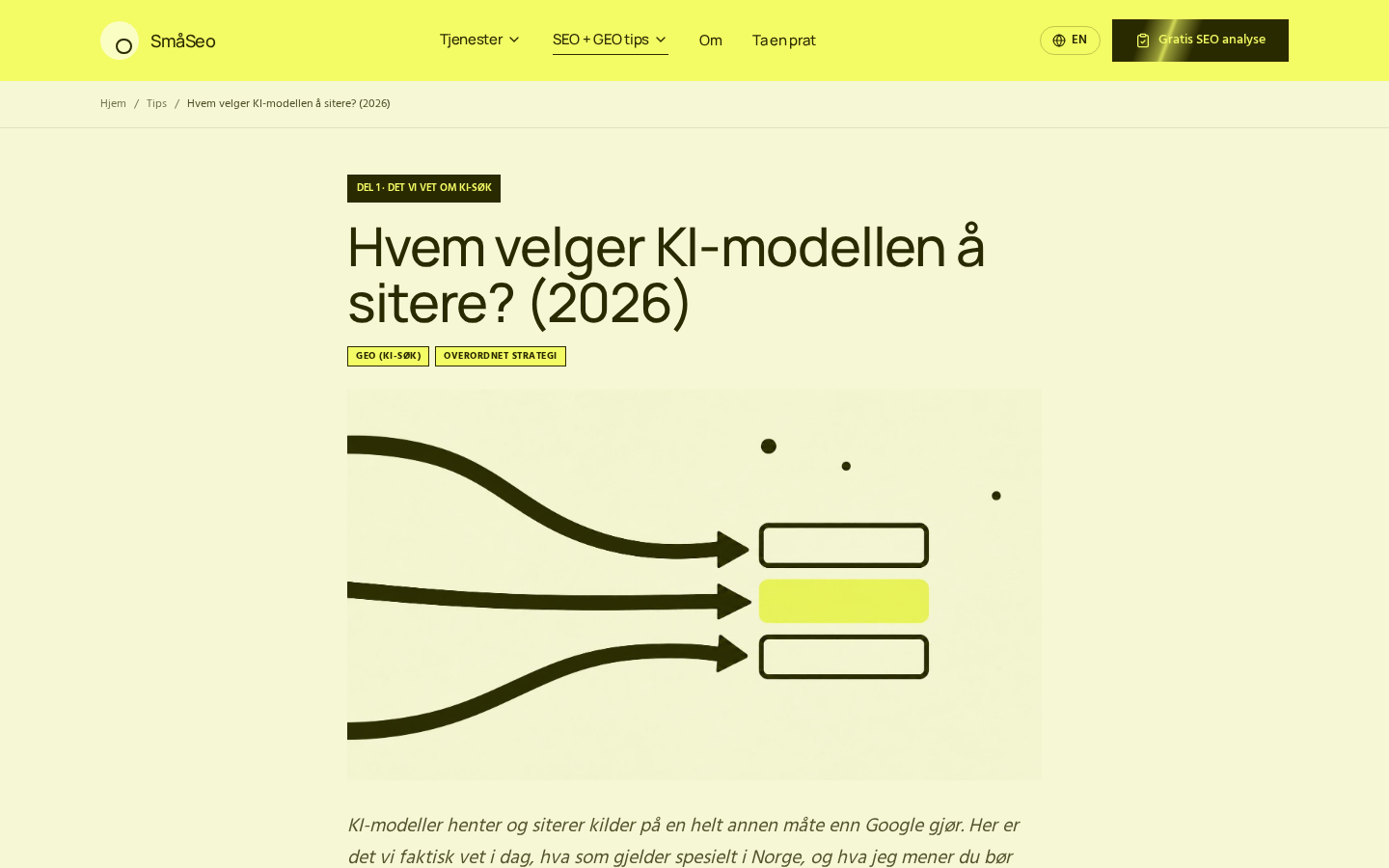
The series "What we know about AI search" is the newest part of this: five articles that follow each other, with their own series badge, a map of where you are, and newsletter sign-up inside the article.
Move 3: give away something that costs me something
Most sites ask for an email address in exchange for a promise. I wanted to give away something that does real work first.
The free SEO audit checks the technical side of your site and lets an AI assess how likely it is that your page gets cited in ChatGPT, Perplexity and Google AI Overviews. The report lands in your inbox. No sign-up, no card details.
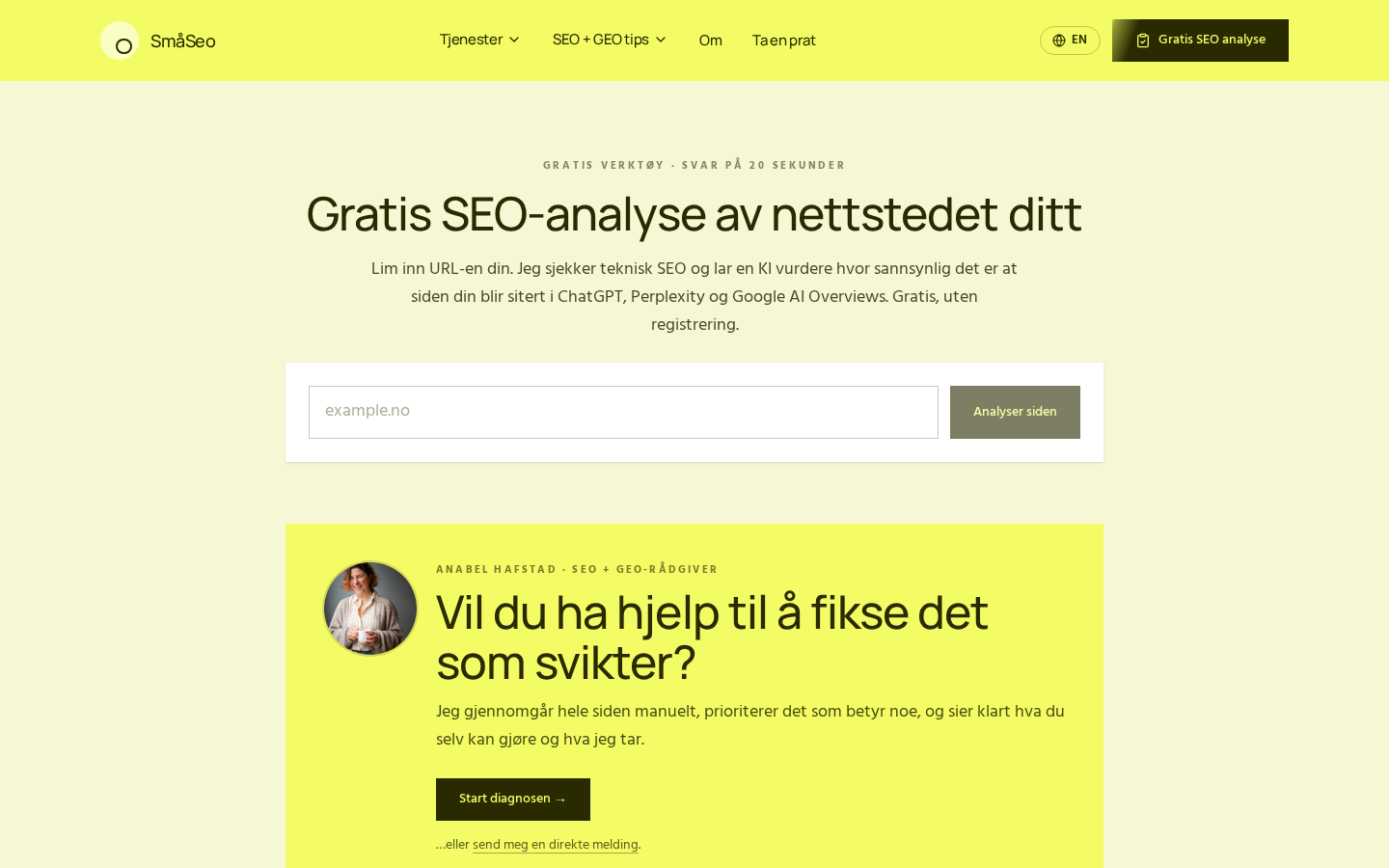
It gave me something unexpected: I see the problems people are actually sitting with, before the first conversation.
Move 4: a chat that reaches my phone
There is no support department here. Write in the chat and the message lands on my phone, and my reply goes straight back into your chat.
Same idea as the rest of the site: as few steps as possible between you and an answer.
Move 5: the newsletter is my own
The newsletter does not sit with a provider. Drafts, preview, a test send to myself, recipient selection and the send itself all live in an admin on the site, and the newsletters are designed in the same style as the website and the blog.
Every email goes out separately to one recipient, so nobody sees anyone else's address. Unsubscribing works in one click, with no form and no questions. And I can see how many clicked through to the article.
Honest about where I stand
This case is about how the site is built, not a traffic report. That is deliberate: what you can copy are the moves, not my numbers.
But one development is worth showing: visibility on Google has taken off. Over the last three months the site appeared almost 24,000 times in search results, against around 2,500 in the three months before. Clicks are still few, and that is fine. Clicks are a hard metric now that more answers are read straight in the results and in AI tools. Visibility is built first, and it is pointing clearly upward.
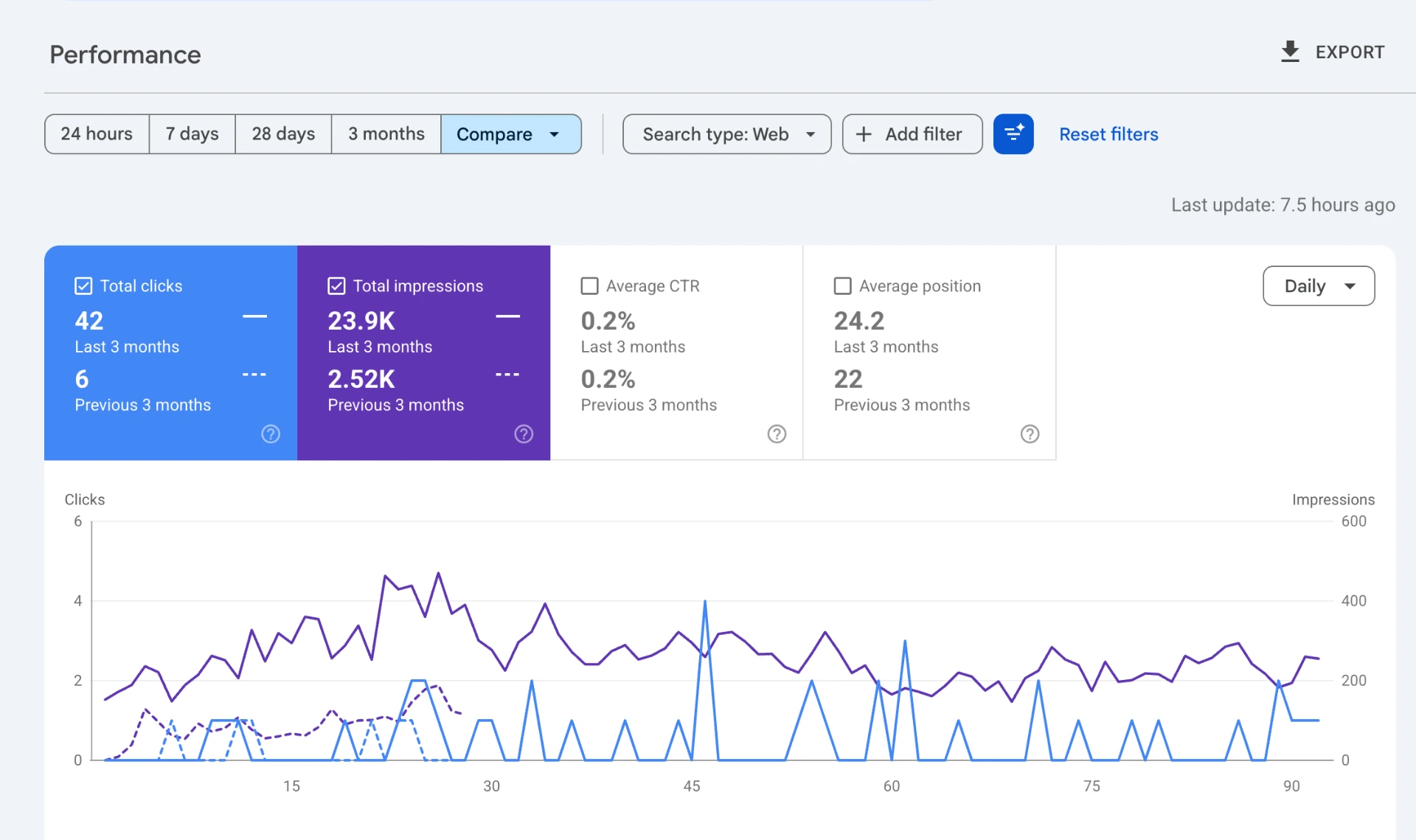
I will keep writing about the progress as it happens, with the numbers as they are.
My advice to you
Don't build a business card. Build something that can grow: a structure where you can add an article, a service or a tool without calling anyone.
If you are unsure where you stand today, start with the free audit. It costs you nothing, and it tells you more than an hour of talking.