In this article
If you run a physical business or offer services in a specific geographical area, local SEO often delivers the most traffic for your money. And yet, Google Business Profile is where I most often find the biggest, simplest mistakes.
What is local SEO?
Local SEO is the collective term for everything you do to be visible when someone searches for what you offer in your geographical area. It's a distinct discipline because Google treats local searches fundamentally differently from general searches.
When someone searches for "dentist london" or "pizza near me", they get:
- The map pack at the top (three to four local businesses with a map)
- Organic results below
- Often ads both above and below
The map pack is where most of the clicks happen. If you don't get in there, you're invisible to local customers, no matter how good your organic content is.
Google Business Profile: the engine of local SEO
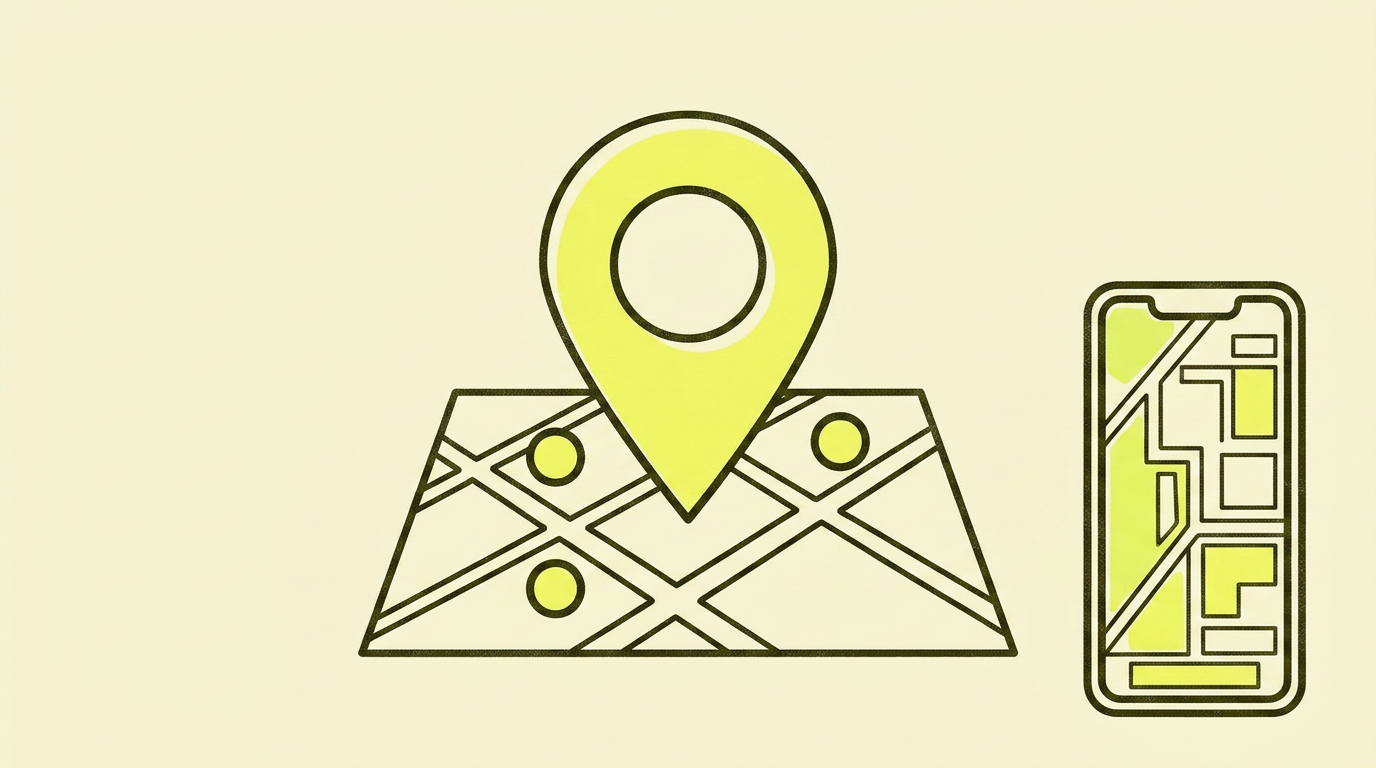
Google Business Profile (formerly Google My Business) is the free listing that controls how your business appears in Google Maps, the map pack, and the Knowledge Panel on the right-hand side.
If you don't have a profile, you don't exist in local search. If you have a half-finished profile, you're competing with a blindfold on. If you have an optimised profile with a steady stream of reviews, you're in a completely different league.
How to set up your profile correctly
- Claim or create your profile. Go to google.com/business and search for your business. It either already exists (and you need to verify ownership), or you create a new one.
- Verify ownership. Google will either send a postcard to your address, call you, or let you verify via video for certain industries. Without verification, you can't edit your profile.
- Fill in every field. Business name (exactly as it's registered with Companies House), address, phone number, website, opening hours, category, services, products, attributes (like "outdoor seating" or "wheelchair accessible").
- Choose your primary category carefully. This is the single most important choice you'll make. "Pizzeria" ranks differently from "Italian Restaurant" or "Takeaway Restaurant", even though all might be correct. See what the top 3 in the map pack are using and make an informed decision.
- Upload photos regularly. Profiles with many, recent photos get more engagement. Aim for at least 10 photos to start with, and update monthly.
- Write a description using natural language. You have 750 characters. Don't keyword-stuff; write as if you're talking to a customer.
What ranks in the map pack?
Google has never published an official algorithm for the map pack, but through years of tests and case studies, three factors consistently stand out as the most important:
1. Relevance. Does your category, services, and content match the search query? If someone searches for "plumber stavanger" and you're registered as an "HVAC contractor" without further specification, you'll lose to a competitor who explicitly has "plumber" as their primary category.
2. Distance. How close are you to the searcher's physical location? You can't influence this directly, but it means that ranking in local search is dynamic. You might be number 1 for customers in the city centre and number 8 for customers in Sandnes, for the same search.
3. Prominence. How well-known and active is your business online? This is where reviews, links, mentions in the local press, and how complete your profile is play a major role.
Reviews: the fuel in the engine
No single factor has a greater effect on local SEO than reviews. Google looks at:
- Number of reviews. More is better, all else being equal.
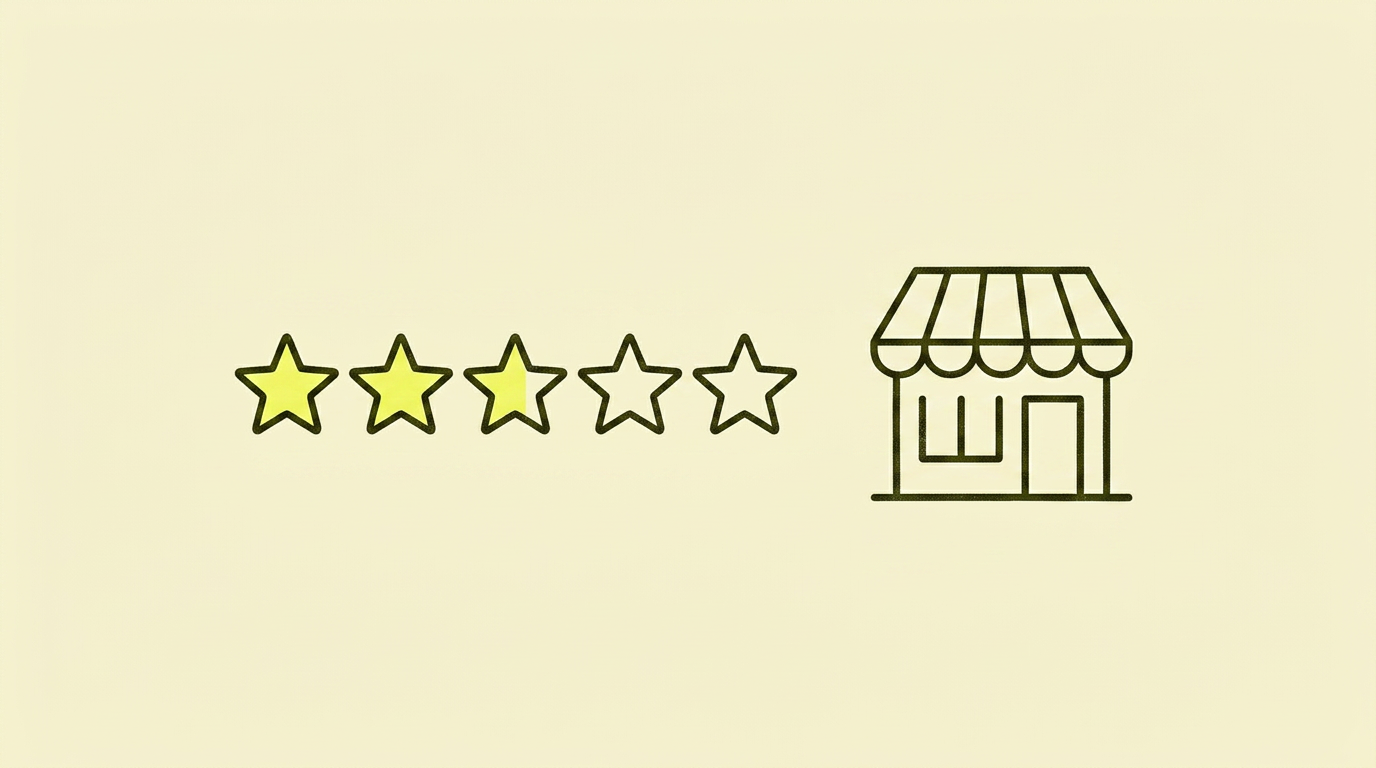
- Average score. 4.5 to 4.9 is the sweet spot. Below 4.0 is damaging, while above 4.9 can look "too perfect" to human eyes.
- Recency. Reviews from the last 3 months count for more than those from 2020.
- Content. Reviews that mention specific services or products ("great haircut", "fast delivery", "good coffee") strengthen your relevance for those keywords.
- Your responses. Replying to reviews is a strong signal that the profile is active.
How to get more reviews (without bending the rules)
- Ask, systematically. Most customers will leave a review if you ask. Very few think to do it on their own.
- Send a direct link. Google has a direct link generator in the Business Profile Manager. Use it in emails, text messages, or a QR code on the receipt.
- Don't offer anything in exchange. No discount, no free coffee, nothing. It violates Google's guidelines and can get your profile a warning or suspension.
- Reply to all reviews. Positive and negative. It shows your business is paying attention and influences how new readers perceive you.
NAP consistency: boring, but crucial
NAP = Name, Address, Phone. Google (and your customers) check that these three things are formatted identically everywhere your business is mentioned: on your own website, on Facebook, in business directories, on Trustpilot, in the Yellow Pages.
Common mistakes I see:
- Business name with and without "Ltd"
- Address with or without a postcode, or with the wrong comma format
- Phone number written as
+47 40 12 34 56in one place and40123456in another - Old address still on Facebook even though you moved in 2023
Fix this first. It's not glamorous work, but it provides the foundation that makes all other local SEO efforts actually work.
Local landing pages: when you cover multiple areas
If you have a business that operates in multiple towns (a tradesperson, consultant, or agency), the next step is local landing pages. One page per town or area, with unique content.
What doesn't work:
- A single page listing "we cover London, Manchester, Birmingham, Glasgow..."
- 30 nearly identical pages where only the town name has been changed
What works:
- One page per priority town, with real local content: testimonials from the area, pricing adapted to the market, photos from previous projects there, a case study or two.
- A local phone number if possible, or at least a clear "we'll travel to [Town] at short notice".
- Internal links to your main service pages.
Here's what I often see go wrong
- Duplicate profiles. The business has two or three profiles on Google, often because an employee created one before the owners knew about it. Ranking signals get split, and none of them compete effectively.
- Wrong primary category. An accounting firm registered as a "business consultant", a lawyer registered as "legal services" instead of a specialised sub-category.
- Hidden address. Businesses that operate from a home office often hide the address but forget to define a service area instead. This makes you invisible in local search.
- No replies to reviews. Neither positive nor negative. It signals a dead profile.
- Photos from 2019. Google favours profiles that look active. Add one new photo a month.
Case study: From invisible to top 3 in four months
An interior design shop in a medium-sized Norwegian town wasn't ranking in the map pack for its main search term. They had a profile, but it was half-finished, with 6 reviews and the last photo upload from 2022.
The action: We filled in all the fields, added 25 product photos, changed the primary category from a generic "Furniture Shop" to the more specific "Interior Design Shop", and set up a system where customers received a review link by email after their purchase.
The result: After 4 months, they had 41 reviews (up from 6), a 4.7 average, and were in the top 3 of the map pack for their main search term. In-store visits from Google Maps navigation increased by 180%, as measured by Google Business Profile Insights.
Your action plan: Step-by-step
| Step | What to do |
|---|---|
| 1 | Check if your business has a profile on maps.google.com. Claim it if it exists, create one if it doesn't. |
| 2 | Fill in all the fields. All of them. Category, services, attributes, opening hours, holidays. |
| 3 | Upload at least 10 photos: exterior, interior, team, products/services in use. |
| 4 | Write a description of 500 to 750 characters in natural language. |
| 5 | Check NAP consistency everywhere. Use Moz Local or a manual check. |
| 6 | Set up a review system. QR code, email template, SMS workflow. |
| 7 | Reply to all reviews within 48 hours. Keep it short, personal, and avoid template language. |
| 8 | Add one new photo per month. Set a calendar reminder. |
| 9 | Covering multiple towns? Create one dedicated landing page per priority area. |
| 10 | Keep an eye on your Business Profile Insights. See which searches you're appearing for, and adjust your categories and text accordingly. |
In summary: My take on local SEO
Local SEO is probably the area of SEO where you get the most impact for your time. A tradesperson who optimises their profile, collects 30 reviews over six months, and creates three solid local landing pages will likely see a clear increase in calls and enquiries.
Compared to other SEO work: competing for "plumber" nationally is an uphill battle that takes years. Competing for "plumber sandnes town centre" is something you can win in 2026 if you do the groundwork properly.
Start with your Google Business Profile. Spend two hours on it. Come back and do the next step next week. It's no more complicated than that.