In this article
After writing the article you're reading now, plus a couple of dozen more for this site, I see the same pattern repeating itself. It's not a formula, but it's pretty close.
What I mean by SEO content
An SEO text is an article that answers a specific question people search for, and is structured so that both Google and the reader can find the answer quickly. That's it. Everything else — keyword density, LSI phrases, ideal character count — is derivative noise.
The goal is threefold:
- Rank in Google for a keyword with real intent.
- Convert the reader into something (a click, a contact, a return visit).
- Be cited as a source in AI Overviews and by AI models.
All three requirements point in the same direction: write in a structured, specific way, and with a clear author.
Start with intent, not the keyword
Keywords are the entry point — 'what people type'. Intent is what they actually want. If you mix them up, you'll write the wrong article.
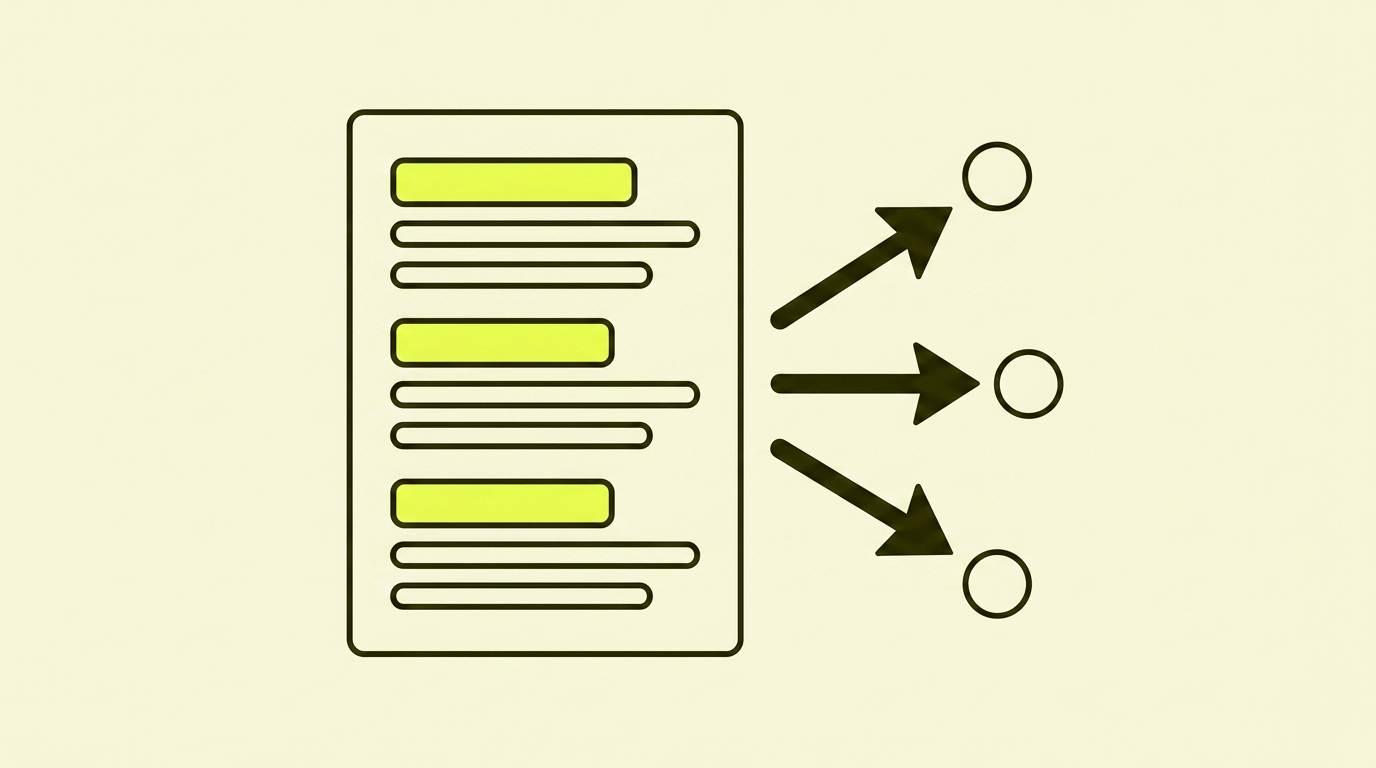
Four main intents to consider:
- Informational intent ('what are internal links') — the reader wants to learn. This should be answered with an explanatory guide.
- Comparison intent ('shopify vs woocommerce') — the reader is evaluating options. This should be answered with an honest comparison, not a sales page.
- Commercial intent ('seo agency oslo') — the reader intends to buy. This should be answered with a sales page, not an article.
- Navigational intent ('småseo login') — the reader has already decided where to go. This should be answered with the correct page, not content.
If you write a guide article for a search with commercial intent, you won't rank, no matter how good the article is. I learned this first-hand by trying to write a keyword analysis guide when I was looking for something completely different — the point is that intent is the first choice, and all other choices follow from it.
The pattern I use — a structure that works
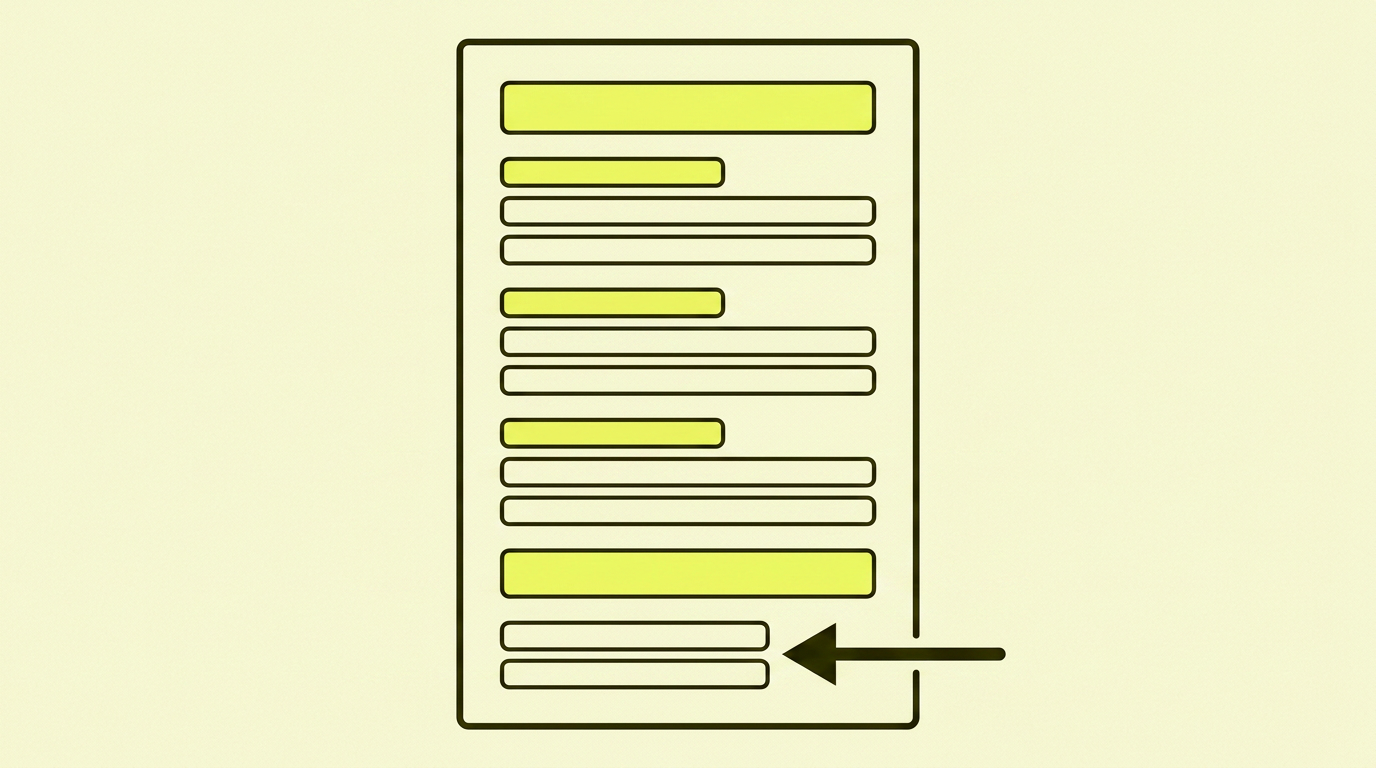
After many articles, I've settled on this structure. It's not a definitive formula, but it works consistently. Take a look at the internal links article, for example — it has the exact same setup.
From top to bottom:
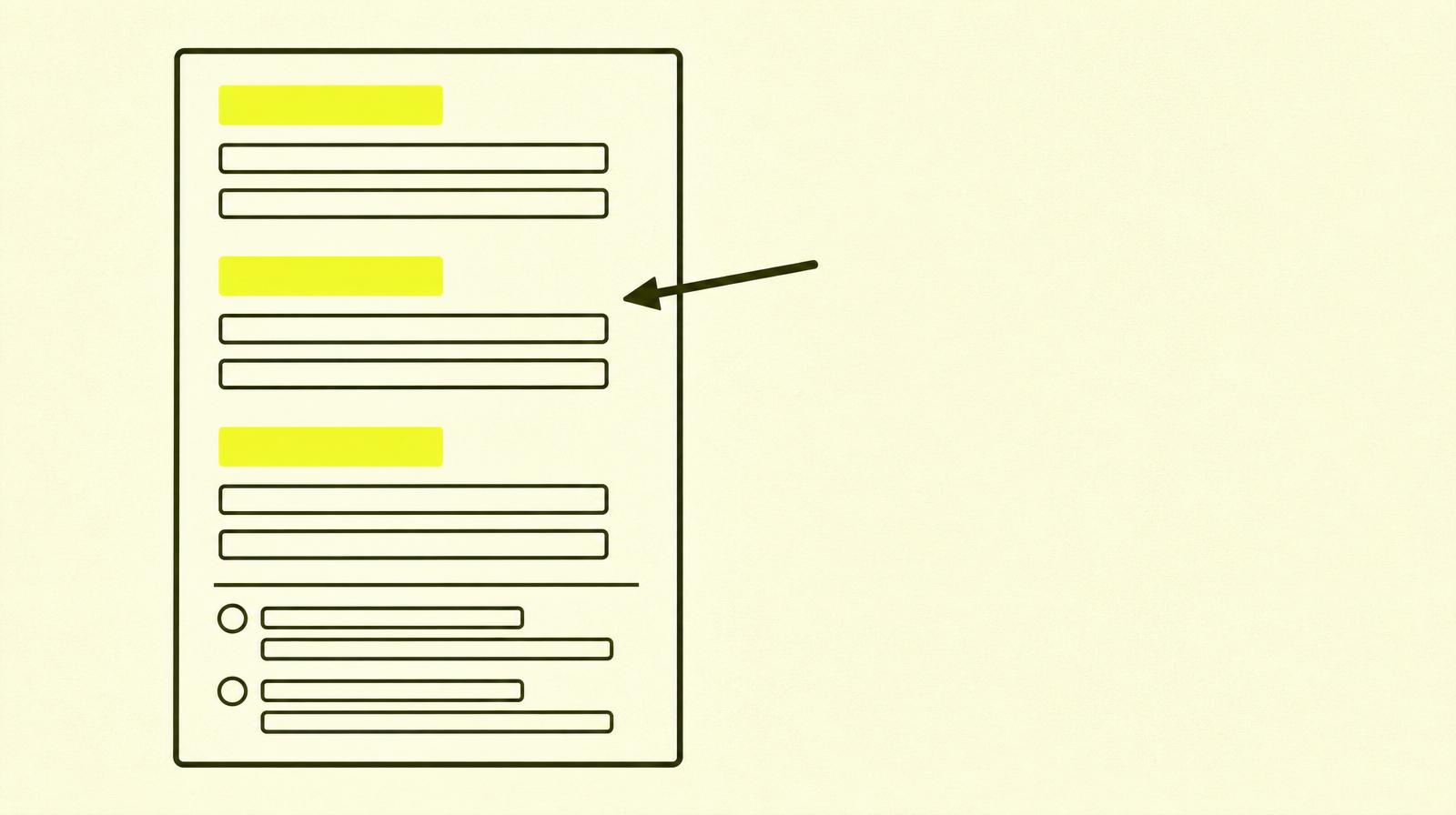
heading(H1): the longer, more descriptive headline. It often differs slightly from thetitle— the latter is written for the search results, the former for the reader who has already clicked.- KeyTakeaways at the top: 4–5 key points the reader should know in 30 seconds. This is for both scanners and as concrete help for AI models that extract snippets.
- A two-sentence intro. One emotionally engaging line + one that sets the agenda. Not a wall of text.
- H2s as main questions, not slogans. 'What is X' beats 'The story of our approach'. Google and AI pull H2s directly into answers.
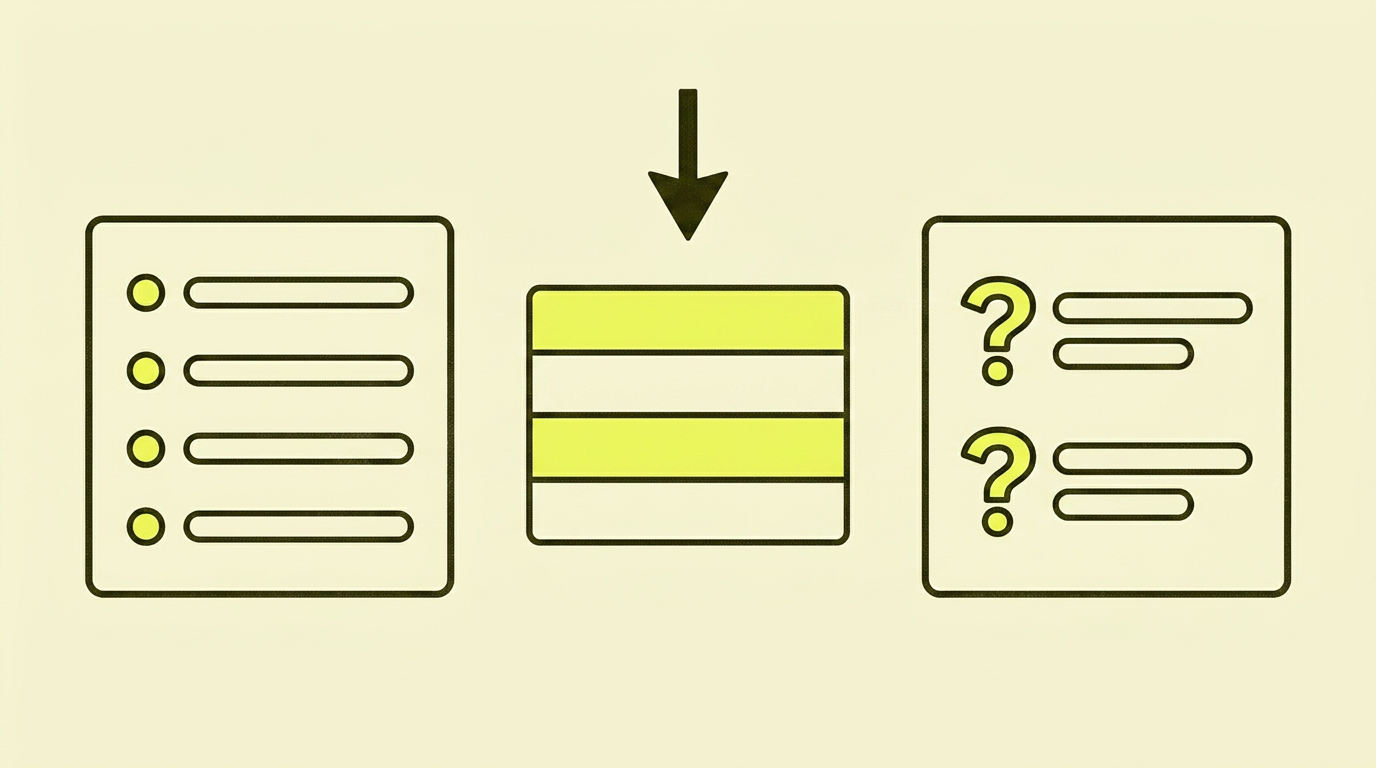
- Bullet points for lists, paragraphs for arguments. Don't force a point into the wrong format.
- One
<Figure>per main idea that deserves to be visualised. Not two in a row. - Callouts for 'Worth noting', 'My advice to you', 'What I see working now' — interruptions that establish a voice and give the eyes a break.
- A table with an action plan towards the end. Specific, time-estimated, and actionable.
- A CTA block before the FAQ — the reader has just finished the entire article, which is when they're most receptive.
- An FAQ at the very end, always after the CTA. It serves as a Q&A for both the reader and AI Overviews, not as a conclusion to the reading experience.
- 'Further reading': 3–5 external links to authoritative sources you use yourself.
Write for one person, not a 'target audience'
The most noticeable shift in my tone after a few articles was to stop writing 'you and your business' and start writing as if I were sitting across from one specific person. There's no secret trick — it just helps with the flow.
Specifically, this means:
- 'you', not 'one', 'the reader', 'the user'.
- 'I', not 'we', 'our approach', 'our team'.
- Specific examples before general principles. If you have a case study, use it. If you don't, pull one from what you've observed.
- A short sentence where needed. A long one where it makes sense.
- Natural language. Not translated marketing English.
A concrete trick: replace all instances of 'we recommend' and 'we see that' with 'I recommend' and 'I see'. The entire text tightens up. You get an author the reader can trust — which is doubly important for E-E-A-T, as AI models check author identity.
Two concrete articles as examples
Instead of theory, let me point to two articles on this site where the pattern is clear — so you can see what it looks like in practice:
- Trailing slashes in URLs — one of the most technical topics, but structured as a guide with KeyTakeaways, three inline figures, a table, and an FAQ. It ranks well for both 'trailing slash' and related technical searches.
- Website migration without traffic loss — same structure, bigger scope. It shows that the pattern scales from short technical answers to complete guides.
Look at the H2s in those articles. They are almost always phrased as questions or statements that answer a specific question. Not 'our method' or 'introduction'. That's not a coincidence.
Formatting that matters: H2s, lists, tables
Structure isn't decoration. It's how Google and AI models extract relevant parts of your text.
- H2 as a question or statement. 'How do you implement schema?' beats 'Implementation'. Google uses H2s as mini-headings in AI Overviews.
- Bullet points for enumerations. Google favours structured lists when the answer to a search is a list. If you have '5 types of schema', actually use 5 bullet points.
- Numbered lists for sequences. If the order is important, make it obvious. Numbered lists have their own rich results.
- Tables for comparisons and action plans. Google often pulls tables directly into the answer box. A 3-column table is often the most cited part of an article.
- Shorter paragraphs. 2–4 sentences. A large block of text makes it difficult to find individual points again.
Internal links: build the cluster as you write
An article that doesn't link to anything else stands alone in your cluster — and orphan pages perform poorly. Add links as you write, not as a final pass afterwards. They'll feel more natural that way.
Two rules I stick to:
- Links should point forward or sideways. To the pillar page in the cluster, to a sibling article that elaborates. Rarely back to the homepage — the logo already does that.
- Anchor text should be descriptive, not generic. 'Click here' is lost context. 'Guide to title tags and meta descriptions' is a free relevance signal.
Update existing content before writing new posts
This might be the most counter-intuitive part: if you're short on time, it's almost always more profitable to update an old article than to write a new one.
Why:
- An existing article has age, backlinks, and indexing. All of these compound.
- A 30-minute update — newer data, a new H2, an updated date — can move an article from position 12 to position 6.
- A new article has to build authority from scratch. Even a good one takes 3–6 months to mature.
Practical workflow: every month, open Google Search Console. Sort by position between 8–20. Those are your candidates. Spending one hour updating three of them often yields more than writing one new article.
Action plan: write one great article this week
Use this as a template:
| Step | What you do |
|---|---|
| 1 | Choose a keyword + verify the intent by Googling it yourself. |
| 2 | Outline the structure: H1 + 5–8 H2s + table/list + FAQ topics. |
| 3 | Write the first draft. Don't edit as you go. Write for one person. |
| 4 | Add KeyTakeaways at the top. Write 4–5 points. |
| 5 | Write the title (50–60 characters) and meta description (140–160). |
| 6 | Add 5–10 internal links with descriptive anchor text. |
| 7 | Write 5–6 FAQ questions with concrete answers. Place them under the CTA. |
| 8 | Add 3–5 external 'Further reading' links. Verify that they all return a 200 status code. |
| 9 | Publish. Add links to the new article from 2–3 existing ones. |
In summary: My take on SEO content
SEO content isn't a separate genre. It's a well-written article that's structured so that machines can also get something out of it. Everything I've described above — H2s as questions, KeyTakeaways at the top, an FAQ at the bottom, tables for summaries — works because it makes the text easier to scan. For you, for Google, for the AI models.
The part that's scary to hear is this: it takes time to write this properly. One article per week is realistic, not three a day. But articles that follow this pattern grow steadily and hold their positions for years, not weeks.
So, choose fewer topics, write about them more thoroughly, and update them more often. That's the whole secret. Or at least, that's the part I can manage to summarise in one article.