In this article
My husband asked me the other day how Google's AI Overviews actually work now. “It seems like it’s the new position 1,” he said.
It’s a good question, asked by someone who doesn't work with this day-to-day, and it deserves a proper answer. Because he’s not entirely wrong. But it’s not the whole picture either, and the difference between the two has a big impact on how businesses should think about visibility going forward.
This article is connected to the first article in the series, about how AI models search and select sources. That one was about ChatGPT, Gemini and Claude as separate products. This one is about something slightly different: what happens inside the Google search you already know, which increasingly has an AI-generated box pasted on top of it.
The results page is no longer a list, it’s a layer of layers
Previously, a search results page was a simple affair. A few ads at the top, then a list of ten organic results. Done.
Today, Google displays 37 different types of elements on the results page, depending on what you search for. AI Overviews, shopping results, local packs, “People also ask”, video carousels, and so on.

So my husband is right that something new has taken the most visible spot. He’s just slightly off about what that new layer actually is, because it's not just one thing.
What AI Overviews actually are
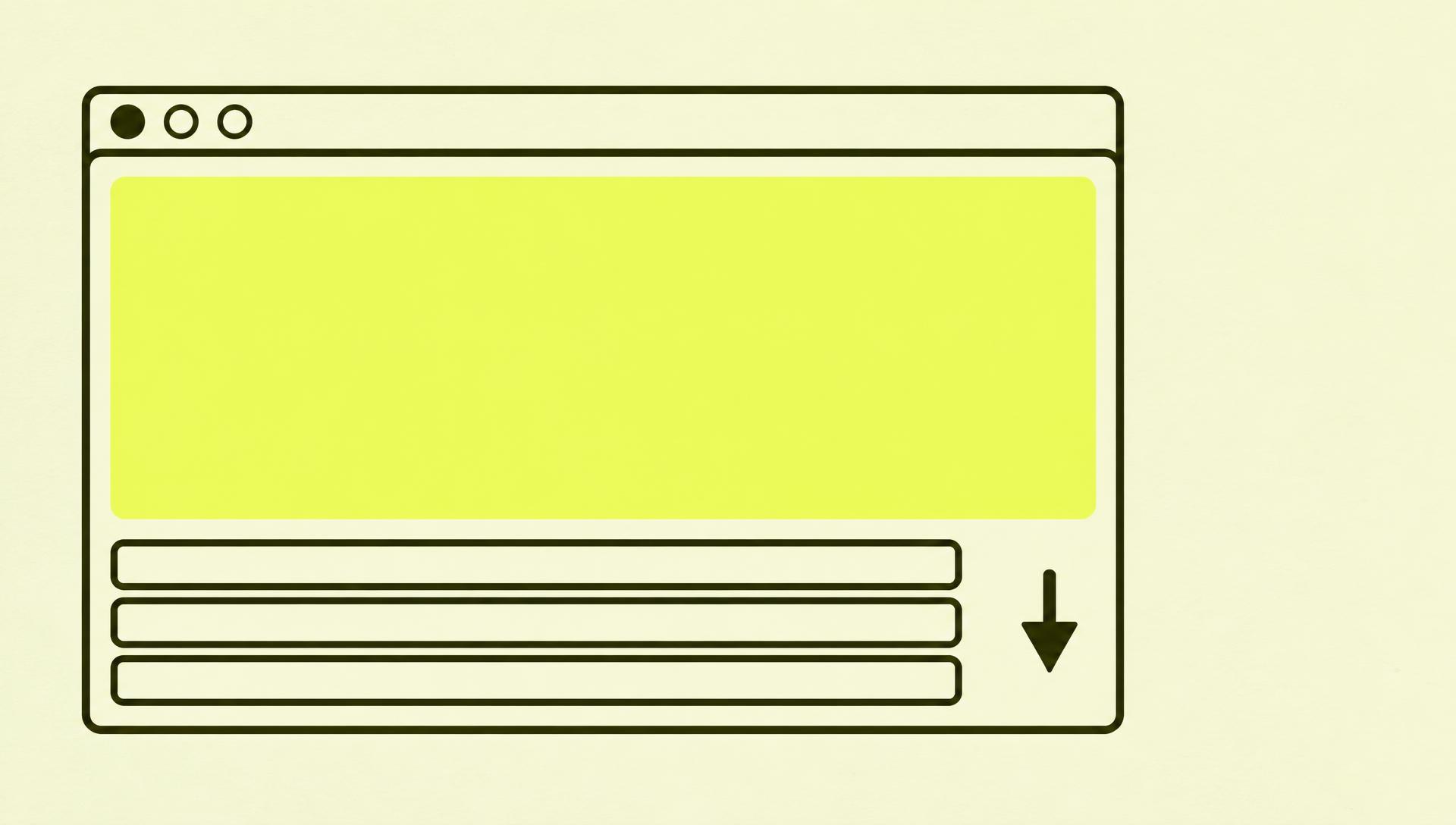
AI Overviews are an AI-generated summary that Google places at the top of the results page for many searches. It summarises information from multiple sources and gives you a direct answer, with some links to where the information comes from.
It was first launched for US users in May 2024 and is currently powered by a customised version of Gemini. In Norway, it was rolled out in the spring of 2025, with wide availability from around mid-May 2025, a full year later than in the US.
It's worth noting that this is a different feature from “AI mode”, a separate conversational tab that Google launched in Norway on 8 October 2025. The two are easily confused, but they are not the same product.
It doesn’t appear on all searches. Studies find slightly different figures here, but somewhere between 13 and 15 per cent of all searches globally trigger an AI Overview, and the proportion is much higher for certain types of questions.
I haven't found a specific coverage figure for Norway, so assume the Norwegian figure is somewhere in this range, not necessarily identical to the global or US one.
What surprised me a little when I dug into this was that AI Overviews often source from pages that aren't on the first page of regular search results at all. One analysis found that over 90 per cent of the links in an AI Overview came from outside the top ten in the classic search for the same query.
This aligns well with something I wrote about in part 1 of this series: that AI models are increasingly selecting sources in a way that differs from what traditional ranking would suggest.
And then there are the ads
Here’s what I think surprises most people, including my husband when I explained it. AI Overviews are no longer an ad-free summary surrounded by ads. The ads have moved into the box itself.
Google now operates with three different ad placements in connection with AI Overviews:
- above the summary
- woven into the summary
- below it
That’s a huge change in just over a year.
This means that when you see an AI Overview, you often no longer see a neutral summary followed by ads further down. You see a mix, where it’s not always obvious what is a generated answer based on web content and what is a paid placement embedded in the same answer.

What happens to the organic results
Here is the number that should worry most business owners more than most other numbers in this article.
You can do everything right, actually achieve position 1 in the organic search, and still see your traffic drop significantly.
The user got their answer in the box above you and never scrolled further. The proportion of searches with no clicks at all, so-called zero-click searches, has increased to somewhere between 65 and 70 per cent for informational searches where an AI Overview is shown.
It's worth mentioning that a separate analysis pointed to something that nuances the picture a bit: text ads, not just AI Overviews, have taken a significant share of organic clicks over the past year, in some industries more than AI Overviews themselves have. So the decline in organic traffic probably has two simultaneous causes, not just one.
Then we have to stop measuring just clicks
Here’s something I spend a lot of time explaining to my clients, because it really changes how you should evaluate whether your SEO efforts are working.
Clicks are becoming an outdated main metric, not because clicks are suddenly unimportant, but because falling click numbers for position 1 often mean the strategy is working, not that it's failing.
Most of the disappearing clicks were related to purely informational searches; what the user really wanted was a quick answer, not a visit to your website. These types of searches are now increasingly being answered directly in AI tools, whether it's an AI Overview or a conversation in ChatGPT.
What I stick to instead, taken straight from Google Search Console:
-
Average position. This is effectively a measure of whether Google thinks your content deserves a good spot. If it stays stable or improves, it indicates that Google still considers the content to be what they call "high quality". A signal that resonates well with Google initially often has a positive spillover effect on visibility in Gemini specifically, since it sources directly from Google's index, but the connection is much weaker for ChatGPT, Claude and Perplexity, as I've shown earlier in this series.
-
Impressions. How often do you actually show up in the search results, regardless of whether anyone clicks? If you see a clear increase here, you know your SEO strategy is having an effect; you're becoming visible more often, even if not all those impressions are converted into clicks anymore. The same caveat as above applies here: an increase in impressions is a stronger signal for Gemini visibility than for AI visibility in general.
-
Conversions. These should remain stable, or ideally increase, regardless of what happens with clicks and impressions. If conversions are falling while your impressions are going up, that's a completely different problem than an AI takeover and deserves its own investigation. I go into more detail on how I think about conversion tracking in a separate article.
-
AI visibility specifically. Finally, we try to measure some of the new type of visibility we've effectively "lost" clicks to, i.e., whether you actually appear in the AI answers themselves. This is neither easy nor precise yet, and I've dedicated part 4 of this series to exactly that.
Together, these four provide a more honest picture than clicks alone. And they also answer the question I most often get from clients after their clicks have dropped: no, this doesn't necessarily mean something is wrong. It might mean the strategy is working exactly as it should, just that "working" looks different now than it did three years ago. I go through each of these four metrics in more detail, including some important caveats about average position in particular, in part 3 of this series.
So what does this mean for a business that wants to be visible?
Back to the starting point of this series. Many clients come to me wanting to "get visible in AI" without knowing what that really entails. Here is the concrete answer for Google's part of that picture.
The goal is no longer just to rank highest. It's to be cited inside the AI Overview.
At the same time you keep a solid organic position, because the two are now partially decoupled from each other. A page can lose the vast majority of its clicks even if it still ranks well, if it doesn't also become one of the sources in the summary itself.
Sources
Norwegian launch
- Team Robin, Google AI Overview now in Norway, how the search experience is changing
- Team Robin, AI Mode now in Norway, Google expands search behaviour
- Google Norway, press release via NTB, Now Google is launching AI mode in Norway (8 October 2025)
- Digital Norway, Google's "AI mode" finally launched in Norway
Global mechanics and statistics
- Bir.ch, Google Ads in AI Overviews: What's Changing in 2026
- Nightwatch, Google's AI Overviews: What You Need to Know in 2026
- Averi, How to Get Featured in Google AI Overviews (2026 Playbook)
- GrowByData, Google SERP Features in 2026: The Complete List
- ALM Corp, How Google's SERP Remonetization is Reshaping Search (2025-2026)
- eSEOspace, How Google AI Overviews Impact SEO in 2026
- StackMatix, Google AI Overviews Impact on SEO: What Changed and How to Adapt in 2026
- Zenerom, How AI Overviews Are Impacting Ad Position & Search Rankings
- SeoProfy, Google AI Overviews: Statistics and Trends in 2026
- Memeburn, Google AI Overview Statistics 2026, with further reference to Pew Research Center (2025) and Seer Interactive (April 2026)
- Google, We're bringing the helpfulness of AI Overviews to more countries in Europe
I have not found a reliable, up-to-date figure specifically for the proportion of Norwegian searches that trigger an AI Overview. The coverage figures in this article are global or US unless otherwise stated, and should be read with that caveat. The launch dates for Norway, however, have been verified against Norwegian sources, including Google's own press release.