In this article
Whenever I have built category pages at scale, the hardest part has never been getting the AI to write. The difficult part is ensuring that every single page has a valid reason to exist, and that is determined by your underlying data, not by the model.
What is programmatic SEO with AI?
Programmatic SEO means generating large numbers of pages from a shared template and a structured data foundation. In an online shop, these are typically category pages like “children’s raincoats” or “leather winter boots”. AI serves as a tool that turns data into readable copy, summaries, and guidance tailored to each specific category.
I have personally generated over 200 ecommerce category pages using AI, where every single page underwent quality assurance before going live. The takeaway from that project is simple: when the data foundation was strong, the pages turned out well. When it was thin, no prompt could save it.
Why does programmatic SEO often turn into thin content?
Google considers scaled content a spam issue when large numbers of pages are generated primarily to rank, offering little real value to the user. The classic telltale sign is swapping out a single keyword while keeping the rest of the text identical across hundreds of pages.
The problem, then, is not the AI or the templates themselves. It is pages that offer nothing unique. If you cannot explain what makes page number 147 distinct, it probably should not exist in the first place.
How do you build programmatic SEO with AI safely?
I always follow a four-step process, and I never skip the first one.
1. Data foundation first
Gather everything that genuinely differentiates your categories: product counts, price ranges, brands, materials, sizing, common customer service queries, and what users are searching for in Search Console. The more concrete your data, the less the AI has to guess.
2. A variable map for each template
Map out which fields need to be populated on each page, marking clearly which ones are unique and which are shared. If a category lacks enough unique fields, that is a clear signal it should either be merged with another or put on hold.
3. AI enrichment from data
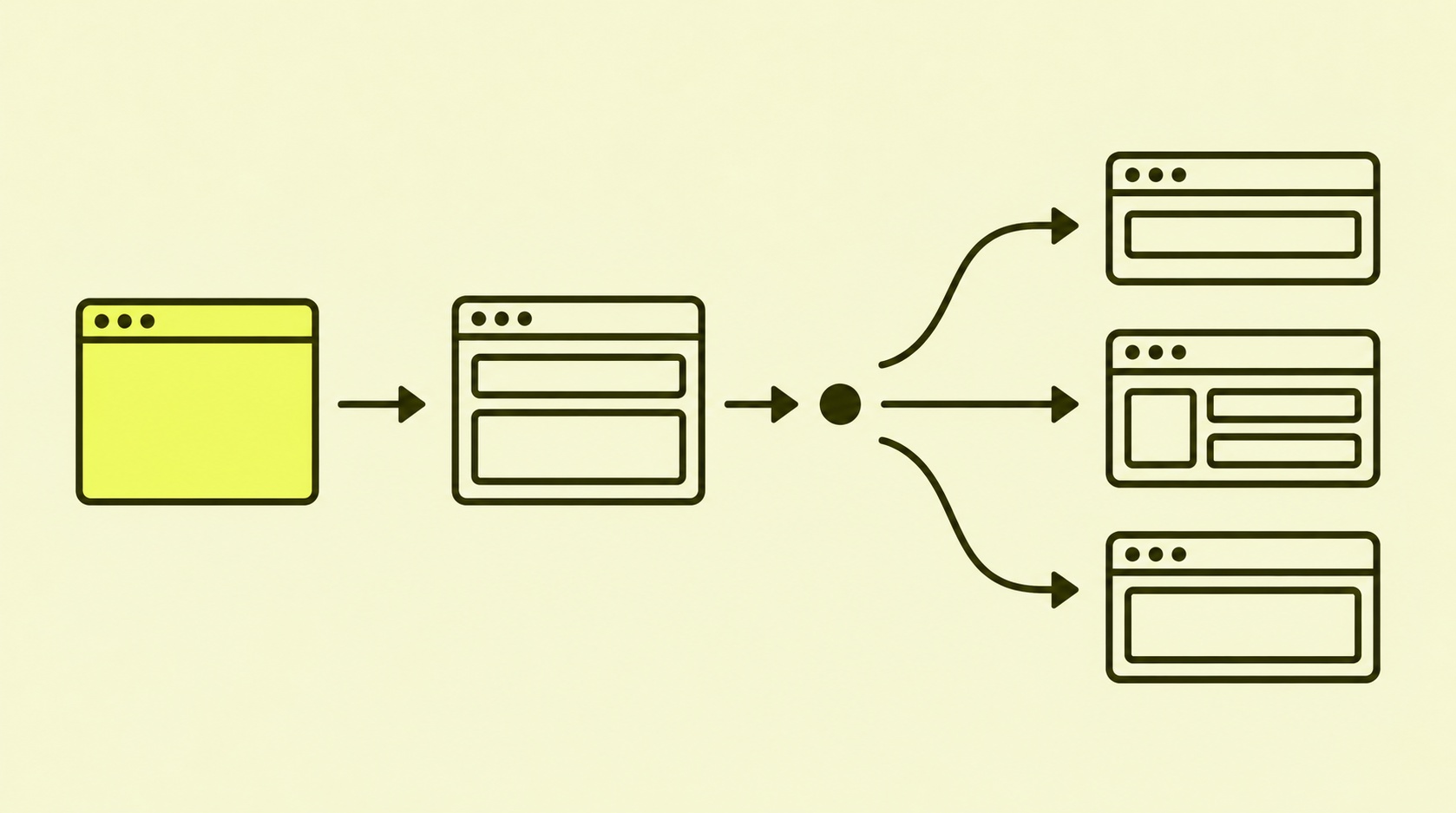
Feed the AI the data fields for a single category and ask it to craft an introduction, buying advice, and answers to common questions based strictly on that information. Make it explicitly clear in the prompt that it must not invent features, prices, or claims not found in the source data. Structured product data should always be pulled directly from your product database, not from the AI-generated copy.
4. Quality control before publishing
Review a representative sample of pages from each template, and compare two random pages side by side. If they look virtually identical, the template or the source data needs work. Next, publish a small pilot, monitor indexing and impressions in Search Console, and only scale up once the pages are actually gaining traction.
How do category pages fit into your site structure?
Programmatic pages perform best when they fit naturally into a well-defined site architecture with logical hierarchy levels and internal links. If you are unsure how your categories should connect, start by reviewing your ecommerce site structure before creating dozens of new pages. Otherwise, you risk multiple pages cannibalising each other for the same search queries.
Common pitfalls in programmatic SEO
- Writing the copy before the data exists. AI fills in the gaps with generic filler text that ends up identical across every page.
- Creating a page for every conceivable combination. Facets like “blue jacket size 98” turn into standalone pages with zero search demand or value.
- Failing to review the pages. Errors and duplicated phrasing are only caught once Search Console reveals the pages are not being indexed.
- Publishing everything at once. Without running a pilot, you will not know whether the template works until you have hundreds of broken pages to clean up.
Summary: My advice on programmatic SEO with AI
Spend more time on your underlying data than on tweaking prompts. When each page brings something distinct to the table, AI becomes an efficient tool for writing it up rather than an engine churning out thin content.
Start with a pilot, review the output, and scale up afterwards. If you want help setting up an automated process with proper quality control, you can read more about my AI SEO workflow services.