In this article
It is frustrating to pay for a good article if the reader gets all the value without ever visiting your site. Zero-click searches mean your content has to do more than coax out a click: it must build brand recall or lead to something you can actually make money from.
This is about the business model, not yet another breakdown of declining clicks.
You will find the background and figures in part 2 on AI Overviews.
How you assess the impact beyond traffic is covered in part 3 on measuring beyond clicks.
The traffic model is the one falling apart
The old recipe was straightforward: write about questions many people search for, get them onto your website, and hope that some eventually buy.
It worked well enough that "more content" could become a strategy in its own right. A definition here, a checklist there, and more and more entry points to the site. AI made that strategy even cheaper, and even less effective: when anyone can publish the exact same answer, the answer itself no longer sets you apart.
But if the search engine delivers a satisfying answer right on the page, the reason to visit that specific article evaporates. The cost of production and maintenance remains squarely with you.
For an ad-funded publisher, this can threaten the core product: the attention sold to advertisers. For a consultant or an online shop, the question is different: did these visits actually contribute to paying clients, or did they just look flattering in the analytics report?
This is not necessarily the death of top-of-funnel content. It is, however, a serious challenge for content whose only justification was traffic.
Give informational content a clear job
When I review a content plan in consulting work, a useful question is: what should the reader associate you with afterwards? If the answer is merely "that the company exists", the link to the business is too weak.
A general explanation can still be valuable. It can help a prospective client understand their problem, support existing customers, or document subject-matter expertise.
But you do not need to publish a new definition article every time a keyword tool surfaces a question.
In May 2025, Google recommended prioritising unique content that adds value over content that can easily be substituted by others. That is a useful quality standard, not a guarantee of visits or sales.
For you, this means asking:
- Do I have experience or evidence that adds something fresh?
- Does this topic connect to something I sell?
- Is there a natural next step for someone who needs further help?
Three noes make a strong argument for spending your budget elsewhere.
The cliffhanger principle: the answer first
"Cliffhanger" might sound like the recipe for infuriating clickbait. Here, I mean the exact opposite.
Give the answer away. Do not bury the conclusion at the very bottom, keep the explanation vague, or demand an email address just to show a simple checklist.
What you hold back is not information the reader was promised. It is the work that requires bespoke circumstances, a dedicated tool, or a conversation.
An accountancy firm can explain when it is generally sensible to consider a different corporate structure. The actual assessment of risk, drawings, and plans requires specific details about the business.
An online shop can explain how to choose the right size. A sizing calculator based on their own measurements gives them a reason to visit the shop.
A consultant can explain how to prioritise technical issues. Deciding which issues to tackle first on your specific website requires an audit.
The answer is free. The application is the reason to take the next step.
Make the next step hard to replace
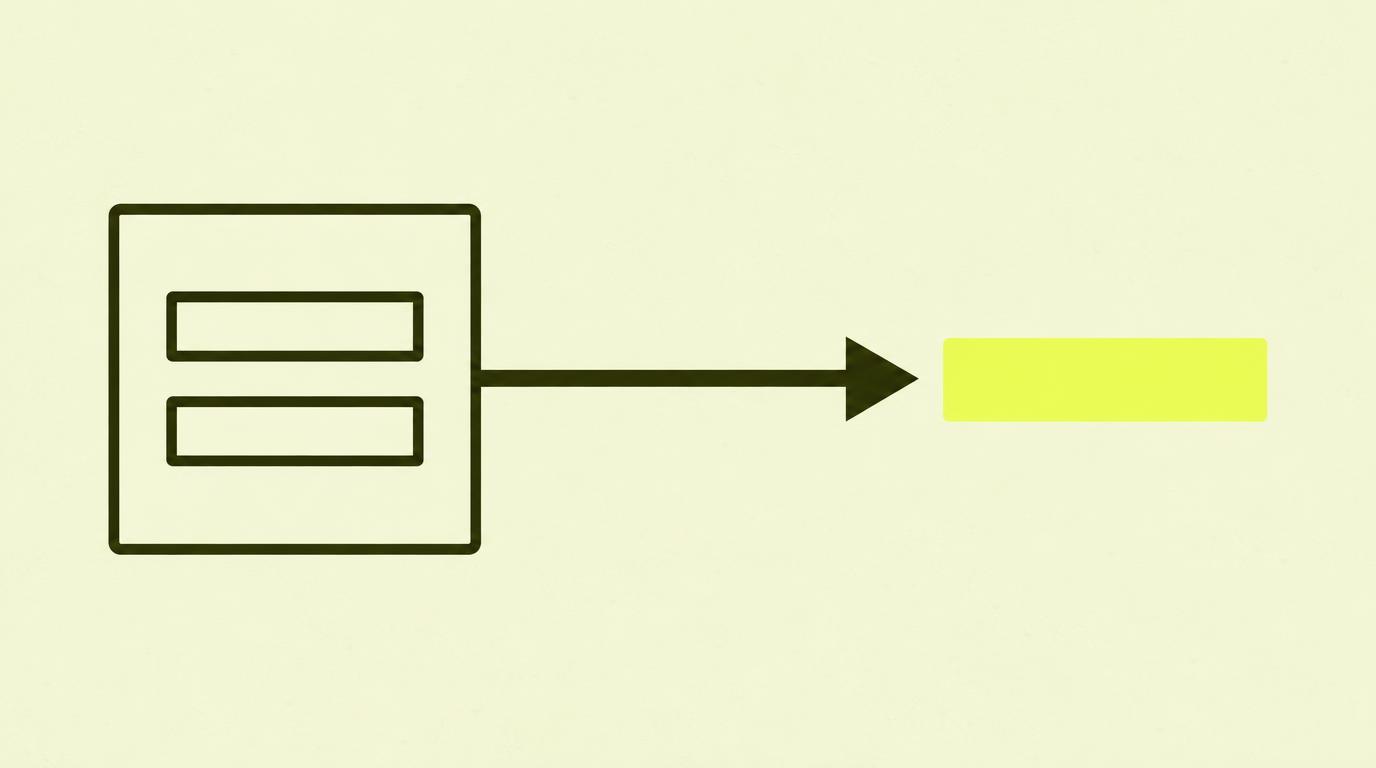
"Contact us for more information" rarely provides a compelling reason to interrupt what someone is doing.
"Find out which of your pages to update first" is far more specific. It explains precisely what the visit or conversation will help you achieve.
In consulting work, I like to use this litmus test: could the next step be resolved just as well with another generic AI answer? If so, the offer needs a clearer value proposition.
That could be:
- A calculation using the client's own figures.
- A demonstration of how the product solves the specific task.
- An assessment of concrete trade-offs and constraints.
- Execution with accountability for the outcome.
This is not automatically a reason to put everything behind a form. By all means, keep a tool ungated. The goal is a worthwhile visit, not gathering as many email addresses as possible.
Zero-click as brand recall
A missing click does not necessarily mean nothing happened.
If a prospective client sees your name associated with relevant, sound advice, it can build recognition. The next time they need help, you might not be a total stranger.
However, there is an important distinction here: just because an AI uses information from your website does not mean the reader notices the author.
An anonymous summary does not automatically build your brand. Even a visible citation can easily be overlooked.
That is why you should develop material that is naturally tied to you specifically: original research, distinct points of view, concrete methodologies, and documented experience. Not just another rehash of an answer everyone else is already giving.
How you find that contribution is covered in part 6 on information gain.
It guarantees neither citations nor clients. It does, however, make you far harder to replace.
Reallocate the budget before scaling production
Start with the content you are already paying to keep updated.
Keep what genuinely helps clients or documents expertise. Improve what has a clear link to your offering but lacks a worthwhile next step. Consolidate or consider retiring content that has neither an editorial purpose nor a commercial justification.
You will find the procedure for that clean-up in part 7 on content pruning.
Do not delete everything that has lost traffic. A solid explanation can still do an important job. But do not order twenty new explanations simply because the old ones used to bring in visits.
Instead, ask yourself: if the reader gets the answer without clicking, what has my business gained? And if the reader needs further help, have I given them a compelling reason to choose me?