In this article
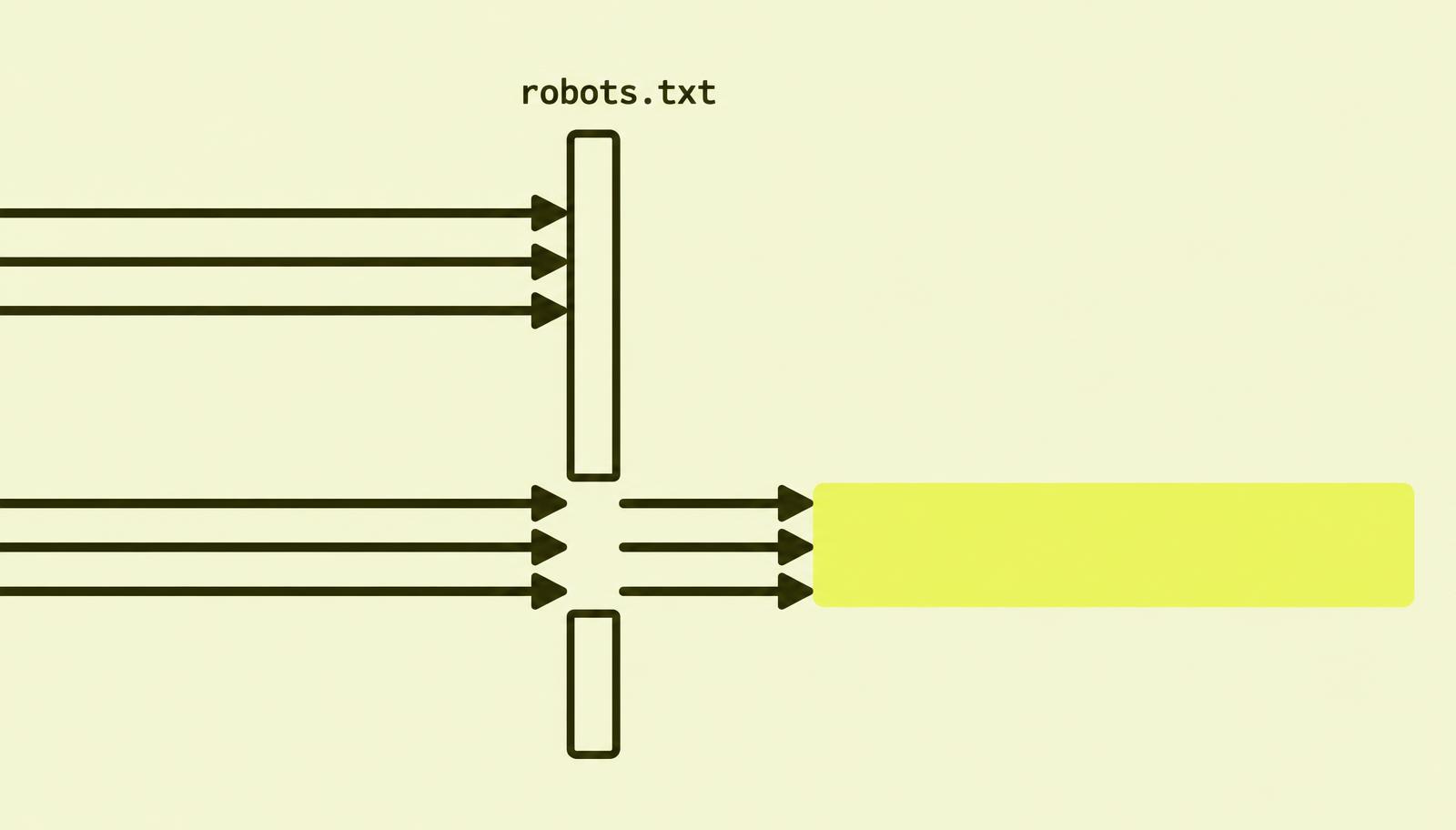
It is easy to want to slam the door when AI services use content you have invested time and money in. My recommendation is to make separate choices for training and search: you can often say no to model training without shutting out the search crawlers that can make you visible.
First: Which use cases are you agreeing to?
"AI bot" is not a single purpose. Distinguish between three things:
- Training: Content is collected for potential use in model development.
- Search: Content is fetched or indexed to find relevant sources.
- User-initiated fetching: A person asks an assistant to open or read a specific page.
When I evaluate access rules in consulting, I start with the website's goals. A business that needs incoming client enquiries faces a different trade-off than a publisher selling access to the content itself.
The decisive factor isn't whether you feel positive or negative towards AI. It is which use cases you want to allow.
Which bots do what?
| Name | Stated purpose | Key distinction |
|---|---|---|
GPTBot | Potential model training at OpenAI | Can be blocked separately from OpenAI's search bot |
OAI-SearchBot | Search results in ChatGPT | Access is no guarantee of citation |
ClaudeBot | Crawling that may contribute to model training | Has its own name and rules |
Claude-SearchBot | Improving search results in Claude | Blocking may reduce search visibility |
PerplexityBot | Finding and linking to pages in Perplexity | Not stated to gather data for base model training |
Google-Extended | Training and grounding across specific Google products | Is a control token, not a separate user agent in server logs |
OpenAI explicitly distinguishes between training with GPTBot and search with OAI-SearchBot. Anthropic similarly separates ClaudeBot, Claude-SearchBot, and user-initiated fetching via Claude-User. Perplexity describes PerplexityBot as a search crawler, not as data collection for training foundation models.
Google-Extended does not fit into a simple training box
Google-Extended controls both future Gemini training and specific forms of grounding, that is, using content to substantiate answers at the moment a prompt is asked.
At the same time, Google states that the rule does not affect inclusion or ranking in Google Search. Therefore, you should not block Googlebot simply because you want to limit Gemini's use of your content.
Robots.txt: no to training, yes to search
This example blocks two training bots and allows three search bots across public pages:
User-agent: GPTBot
Disallow: /

User-agent: ClaudeBot
Disallow: /

User-agent: OAI-SearchBot
Allow: /

User-agent: Claude-SearchBot
Allow: /

User-agent: PerplexityBot
Allow: /
If you also want to restrict the use cases managed by Google-Extended, add:
User-agent: Google-Extended
Disallow: /
The latter choice is not a simple "no" to training. You are also restricting grounding in the products Google describes.
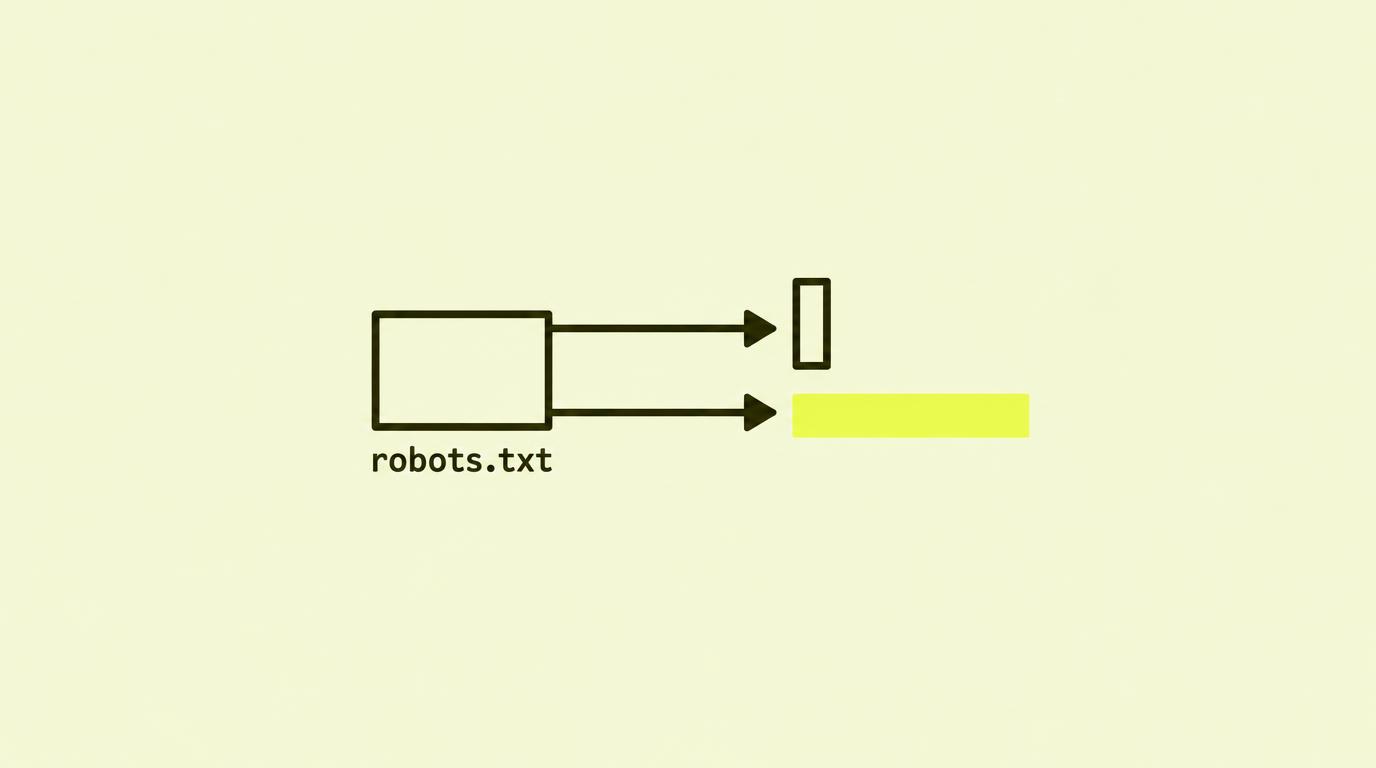
Read the guide to robots.txt before modifying the file. Private documents must be protected with access control, not just a robots directive.
If you want to block search bots as well
Use Disallow: / instead of Allow: / in the groups for OAI-SearchBot, Claude-SearchBot, and PerplexityBot.
This represents a deliberate refusal of access to these bots. It is not a universal opt-out against all AI systems, nor is it a guarantee that your domain will never be mentioned.
User-initiated fetching must be evaluated separately. Names like ChatGPT-User, Claude-User, and Perplexity-User are not the same as automated search crawlers.
Cloudflare: an open file can hide a closed door
On 1 July 2025, Cloudflare announced a move towards blocking AI crawlers by default. New domains were a primary focus for this default setting, not a reason to assume all existing sites received identical rules.
The practical point is simple: Robots.txt and the firewall can say different things.
In technical audits, I therefore never rely on robots.txt alone as the definitive source. I also verify whether the CDN, security provider, or web host actually lets the request through.
Look for:
- Whether AI blocking is enabled for the domain.
- Which specific bots the rule covers.
- Blocked requests and security challenges in the event log.
- Whether desired search crawlers are permitted to fetch public pages.
A browser test from your own machine does not prove that the bot is allowed through. Furthermore, user-agent names can be spoofed, so use the providers' verification methods where available.
What would I choose?
For a typical service business, I would generally allow relevant search bots and make a separate, deliberate choice regarding training.
For a publisher with paywalled content, expensive proprietary research, or licensing revenue, stricter restrictions might make more sense. The value of being cited has to be weighed against the value of readers actually visiting and paying for the original.
Neither choice is cost-free. Open access does not guarantee traffic. Blocked access can diminish your chances of being found.
Start with a simple decision log: which bots do you permit, why, and when will you review the choice? Then monitor server logs, referral traffic, and relevant enquiries. Bot visits alone are not proof of value.
In part 5 on tracking AI traffic in GA4, you will find the measurement setup that should accompany these access decisions.
Llms.txt is not an access control rule
An llms.txt file can present and link to content. It replaces neither robots.txt, a firewall, nor login authentication.
And a new block does not claw back content that has already been harvested. It changes access going forward for systems that honour the directive.